
If you’ve been following my country-hopping adventures here on Travel Off Path for the past five years, you know by now there aren’t that many places left to check off on my Europe bucket list.
Being based in Paris, and getting those $15 Ryanair long-weekender flights every chance I get, I’ve managed to visit every major European country (yep, even Ukraine in times of war), some twice, and over 100 cities.
In reality, it’s a way-higher number than that, but who’s counting at this point?
This Is The Europe I Love
Undeniably gorgeous as Europe may be, if there’s one thing I’ve noticed over the years, it’s how safety has taken a significant turn for the worse in the short timespan of half a decade.
I needn’t even go far to notice: a simple stroll around North Paris will now put me in the same hyper-vigilant state as I usually am in, say, South America or Africa.
No hate, just facts. What we call ‘Western’ Europe is no longer the high-trust society it once was, and that’s a feeling shared by many across the political spectrum.
Still, there are well-preserved pockets of the Europe we once knew and loved. You just won’t find it in London, Barcelona, Rome, or even Stockholm, formerly a rather peaceful capital, now one of the continent’s top crime hotspots.
Without beating around the bush too much, here are 5 European cities where I feel absolutely safe in:
Budapest, Hungary
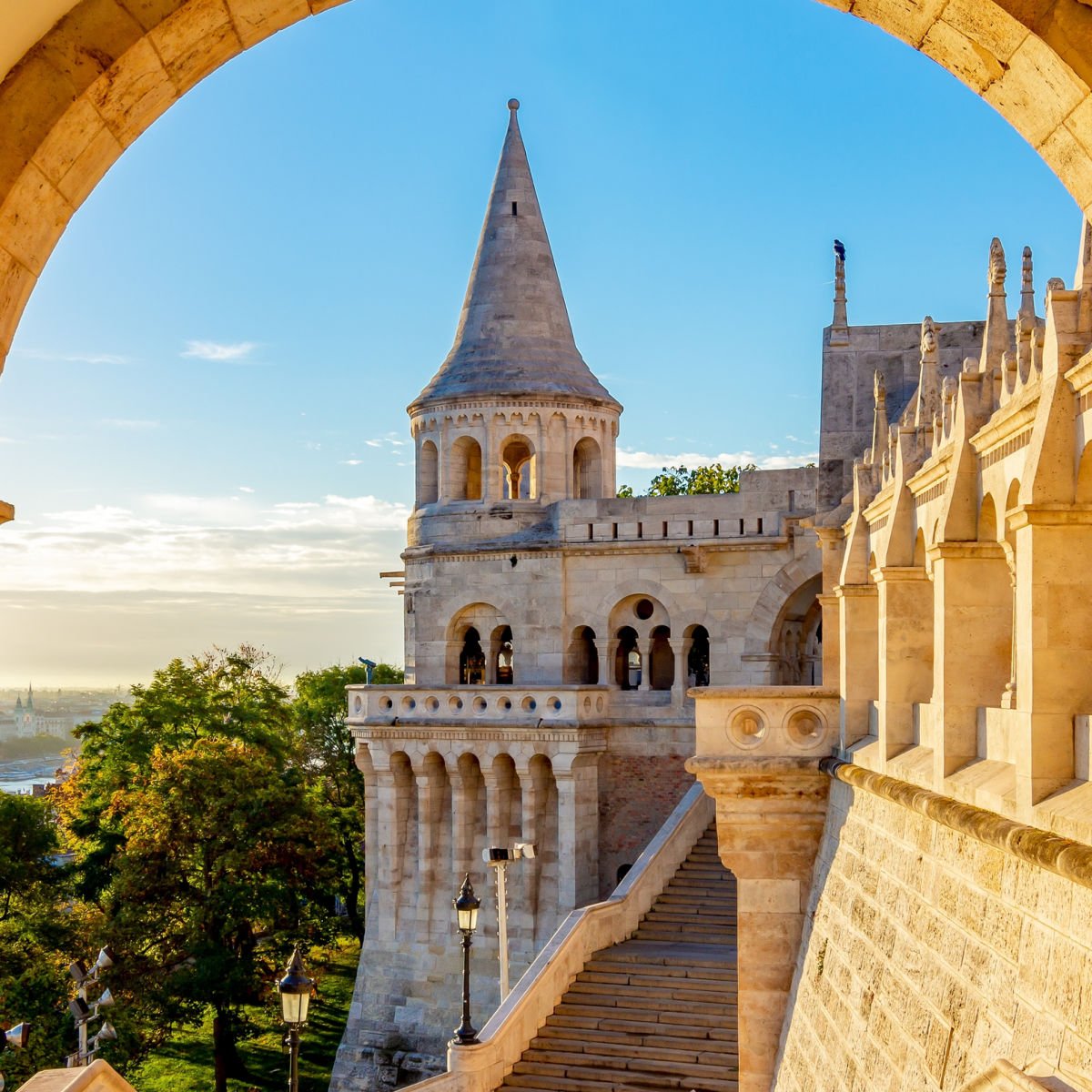
A former imperial city, Budapest has retained much of its past glory, and I’m not talking only about the stately fin de siècle buildings, the red-domed Parliament on the shores of the Danube, and the squeaky-clean streets:
Other than being an absolute stunner, and possibly one of the most beautiful European capitals you’ll ever set foot in, it’s incredibly low-risk for travelers.
Coming from Paris, I’m always a bit wary of letting my guard down, especially in touristy spots, but it will only take you a quick glance around a predominantly, proudly-Hungarian Budapest to notice our self-imposed restraints do not apply here:

People walk using their phones completely oblivious to potential snatchers, train stations do not look like the gateway to the seventh Dantean hell, and women walk home alone late at night without hiding a key between their knuckles.
The U.S. Department of State concurs: Budapest (and Hungary as a whole) is a very safe destination, listed as Level 1: Americans do not have to worry with elevated crime, terrorist plots (there aren’t any), and mugging when visiting.
That said, there might be the odd catcaller or rowdy drunken fellow in the tramway, and I’d maybe consider steering clear of the outer suburbs of District VIII at night—it’s Budapest’s gypsy ghetto and drug problems and rough sleeping are rampant—but overall, you can rest assured violence is a non-issue.
Warsaw, Poland

Yet another Central European capital that’s found itself in my good graces lately is Warsaw, Poland.
I’ve been to numerous large cities in Poland at this point, and I could truly vouch for any of them, but given Warsaw’s size and its global attractiveness, it’s a particularly rare feat that it’s maintained the seemingly-unavoisable urban issues so tightly controlled.
Though it has a metropolitan area of over 3.2 million residents, Warsaw has a very low crime rate of 19.60—if we were to compare, London’s is a devastating 64.93, and my Paris nest an equally shameful 62.35.

Poland has taken some heat in the European Parliament for being tough on its border control, and showing no clemency as far as terrorism threats go, but it seems to have paid off:
Similarly to Buda, you won’t spot locals feeling for their wallets every 10 seconds in the metro, nor women deliberately avoiding certain neighborhoods out of fear of being attacked by baleful men. Poland almost seems to exist in a different universe altogether than that of the wider European Union.
As for me, I quite enjoy wandering around Warsaw’s medieval-esque Old Town, with a café-lined Market Square and a red-brick Barbican, without casting looks over my shoulder, or scanning the (majority-Polish) crowds for my usually-perceivedthreats.
Vilnius, Lithuania
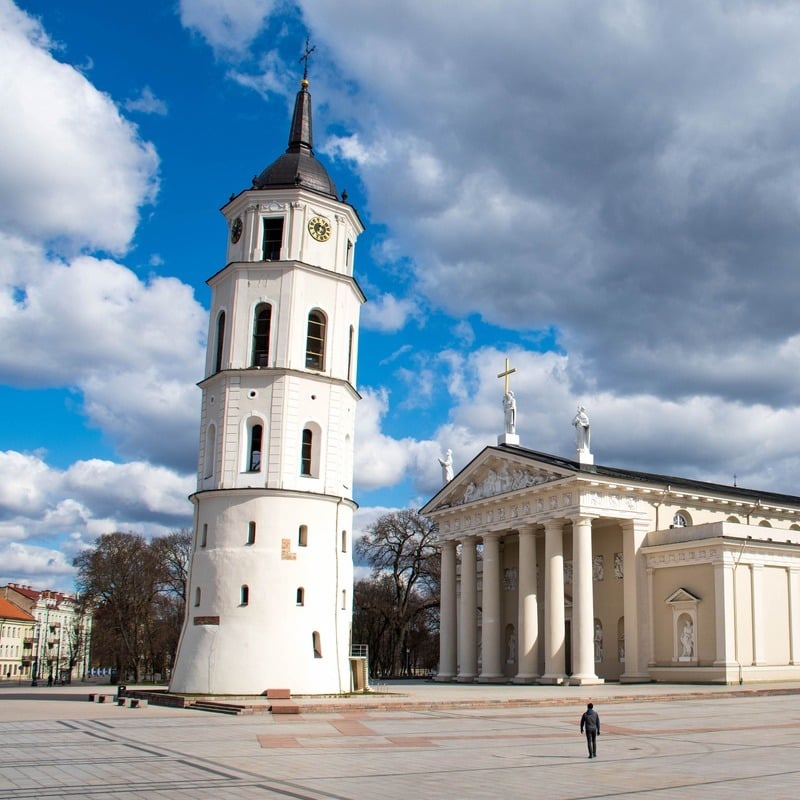
It seems the further East you go, the safer you feel these days. Welcome to Vilnius, the compact, quaint capital of a tiny nation called Lithuania, straddling the Baltic Sea, and a storybook destination without the usual roadside bandits and dragons to slay.
In our Traveler Safety Index, Lithuania is one of the highest-ranking European spots out there, with a ‘stable’ badge and a current score of 85, based on live signals from real people who’ve visited recently.
ANALYZING LIVE SIGNALS…
CONNECTING TO DATABASE…
✅ VOTE RECORDED
⚠️ YOU ALREADY VOTED
NO INCIDENT REPORTS (SHOWING BASELINE)
Our new TOP toy is a great feature to play with if you’re planning to travel around a rapidly changing continent in the near future.
In all fairness, I didn’t even need confirmation Vilnius is on the safer side of Europe:

You can literally forget your charging spare phone in a busy Starbucks behind, and return only several hours later to find it there still where you left it.
Not that it happened to me, mind you…
Plus, this is simply a downright gorgeous medieval gem, with UNESCO-listed cobbled streets leading to richly-frescoed Baroque churches, a hippy, self-proclaimed ‘Republic of Užupis’ district, where the cheekiest and most outlandish of constitutions apply, and an impressive hilltop Gediminas Tower stands watch over tiled gable roofs.
Ljubljana, Slovenia

A national capital with a small-town soul, Ljubljana is that picture-perfect European gem with a cobble-paved, timeless historic center, a meandering river spanned by beautiful pedestrian bridges, and an imposing castle on a hill, like the cherry on top.
Most people come to Ljubljana for the Julian Alps, or more specifically, the postcard Lake Bled. Listen, I totally get it: the quaint church on an islet surrounded by glacial, crystalline waters is like something out of a dream, but I keep telling you, stop sleeping on Ljubljana.
Not only because it’s as pretty a city as they come, but due to its (practically) non-existing crime.

Crime level rates are at an all-time low of 12.68 on Numbeo, be it pickpocketing, armed robbery, or other types of violent assault. Your biggest nuisance here is the odd, insistent Romani beggar—they’re usually chased away by police, though.
I wouldn’t exactly leave my belongings unattended in any case, especially at the main bus station or on a restaurant terrace, but realistically, even in those situations, you’re highly unlikely to have your items snatched.
If you’ve been missing ‘Old Europe’, of the kind that’s not completely succumbed to the spoils of mass tourism, petty theft, and where there’s not a kebab stand every 10 meters, you’ll definitely love it here.
Reykjavík, Iceland

Mothers literally leave their toddlers sleeping in a trolley in the car park while they head to the market to do groceries. Need I say more?
Reykjavik is another clear-cut example of Europe (still) at its prime:
The public transport, albeit limited, runs smoothly and without the usual bad elements wreaking havoc; you could practically eat off the ground because streets are spotless, and you could probably leave an item behind, and either find it in the exact same spot or the nearest Lost and Found.
Part of that is due to Iceland’s own remoteness: it’s a whole 210 miles northwest of the Faroe Islands, the nearest European archipelago, and an even-further 620 miles from Norway, the mainland European nation at the shortest distance.

You can probably guess Southern Europe’s long-standing issues with clandestine boats, knife attacks, and street-level crime are things Icelandic people see in the news, rather than being confronted with on a daily basis.
In order to get to Iceland, you need to fly, and Icelandic authorities are pretty darn square when it comes to ensuring national security.
A permanent Level 1 fixture, under the White House’s auspices, and scoring an equally-impressive 95 in our own Safety Index—much-higher than the average European capital—Reykjavík would be heaven on earth were it not for the jarring price tags and year-round freezing temps.
But hey, you can’t have it all.

The Travel Off Path Advantage: Your Travel Toolkit
Subscribe To Our Latest Posts
Enter your email address to subscribe to Travel Off Path’s latest breaking travel news, straight to your inbox.