
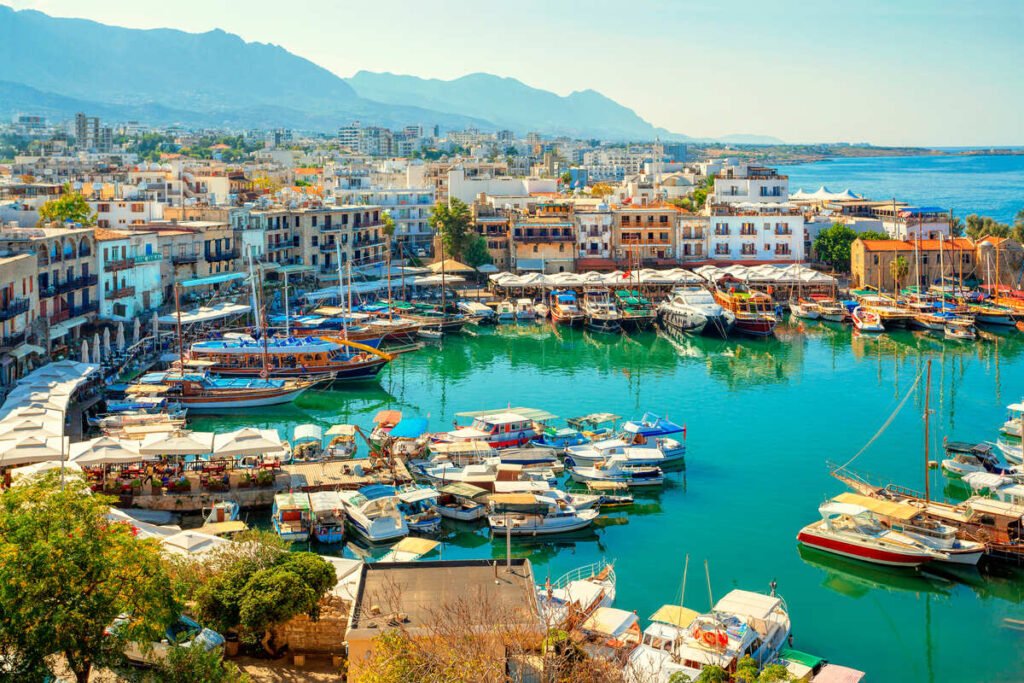
Not Mallorca and its jam-packed calas, where there’s barely breathing room. Not Capri with the invite-only, overpriced beach clubs and $15 Spritz. Oh, and definitely not a now-spoiled Hvar in Croatia, that’s arguably become busier and more chaotic than its spiritual sister Ibiza.
Europe has a new ‘cool kid’ on the block, and it’s an offbeat island in the Eastern Mediterranean where it seems to be perpetually summer:
A small island-nation most Americans have only vaguely heard of, Cyprus has had a record-breaking 2025, with over 4.5 million arrivals recorded, the highest number of tourists since tracking began.
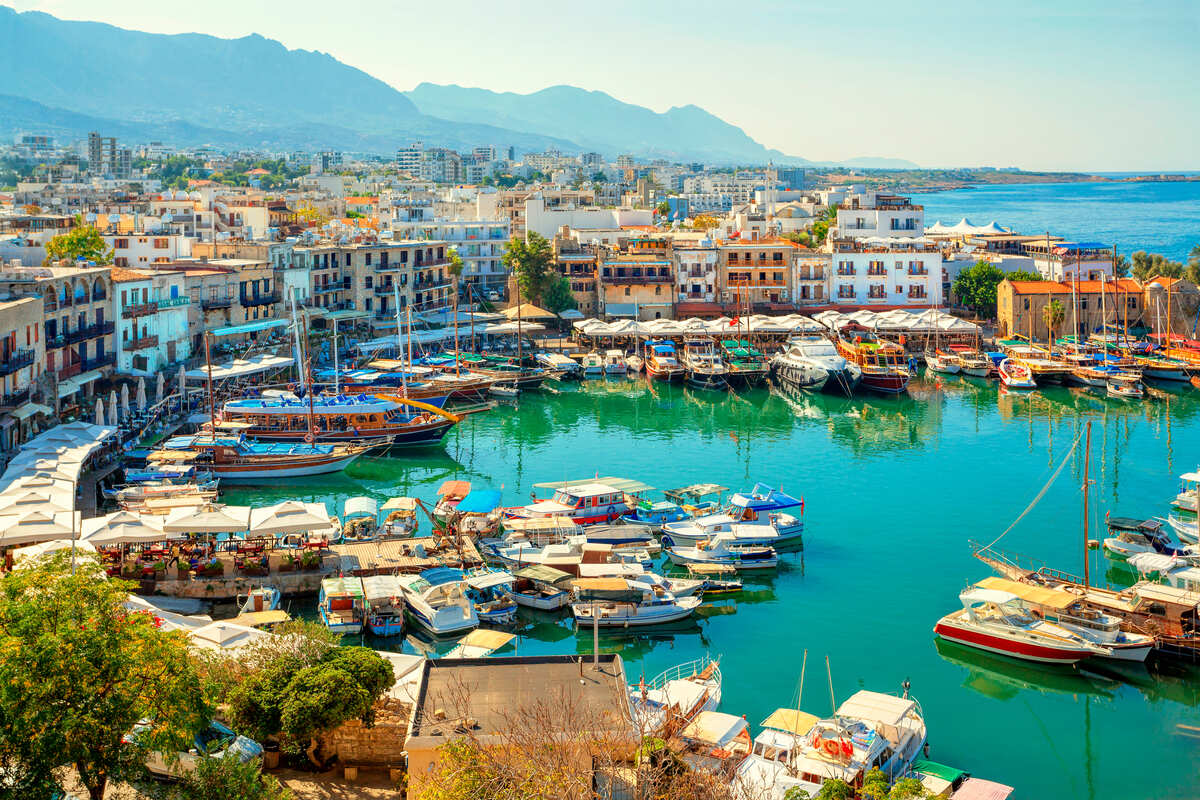
It doesn’t sound all too impressive if you think of other European countries’ figures, but this is a 900,000-strong community living on a remote island roughly the size of the U.S. state of Delaware.
So what’s the big draw here, and why is 2026 poised to become the Year of Cyprus?
Europe Or The Middle East? How About… Both?
First, take a look at any map of Europe.
You might struggle to spot Cyprus at first, especially if you’re not scanning far enough east of Greece. We’re talking so far east that, geographically, it actually sits in the Middle East rather than Europe.
Yep, although Cyprus is geopolitically European, and even a fully-fledged member of the European Union, it is firmly part of Asia: the nearest European mainland lies roughly 500 miles away, while Turkey is only about 43 miles off, and Lebanon and Israel are a mere 110–140 miles across the water.
Don’t worry, though: Cyprus tends to stay well out of most Middle Eastern tensions, but there are still a few important things you should know about this mysterious island.
- If you’re wondering why you’ve never once heard of a ‘Cypriot’ language, that’s because most Cypriots are ethnic Greeks who speak Greek
- The northern third of the island, however, has been occupied by Turkish forces since the 70s, and it has a Turkish majority—but more on that soon
- Cyprus uses the euro, like most EU members, and soon enough, it will ascend to the Schengen Area and officially abolish passport checks for travelers arriving from most European countries
- Due to its geographical location, it doesn’t exactly experience the changing of the seasons like your average European nation… let’s just say you’ll rarely need to retire your shorts here.
How Warm Is Cyprus?
Overall, Cyprus enjoys 300 days of sunshine on average every year, making it one of the sunniest, if not the sunniest part of Europe, on par with Andalusia in Spain and the Canary Islands:
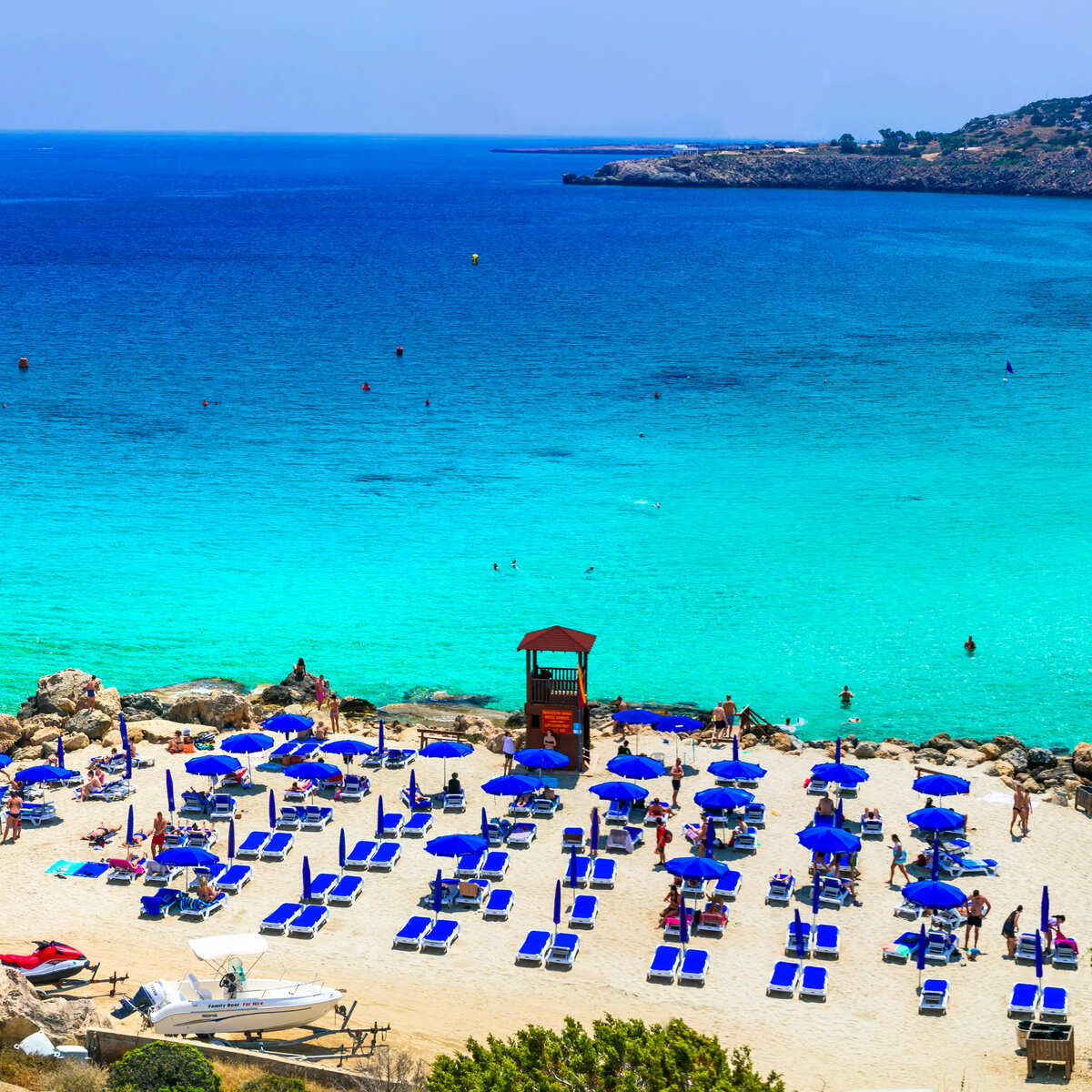
Winter (December–February)
It sees mild highs of 61°F–64°F most days, with around 7 hours of daily sunshine. Evenings are a little cooler, with temps ranging from 46°F–50°F, but nothing a light jacket can’t handle.
Spring (March–May)
It starts to get progressively warmer, rising to an average 68°F in March, and reaching a summer-like 79°F in May. During this period, the island’s lowlands experience lows of 50°F–61°F.
Summer (June–August)
That’s when you probably don’t want to be in Cyprus. On the coast, thermometers easily hit the 99°F mark, and overnight, it’s usually as hot as 82°F. Good luck if your aircon isn’t working.
Autumn (September–November)
The scorching heat drops to a more-pleasant 70°F on average, with nighttime lows of 61°F–57°F, though the sea stays relatively warm for swimming, and there’s plenty of sunshine hours to be enjoyed.
Paphos Is The Cypriot Highlight For 2026

It will soon be spring, and as you might have guessed, it’s nearly time to jet off to Cyprus ahead of the summer crowds, and the unbearable heat that makes Southern Italy in July feel chilly in comparison—but where to go?
If we’re judging by the figures, Cyprus’ tour de force right now, and its main tourist destination is the resort town of Paphos, which sits on the unspoiled West Coast of the island.
It’s where tourism arrivals have grown the most, rising by over 30 percent last year, and where the Ministry of Tourism is pouring in the most investment for 2026.
Paphos is a laid-back beach hub located within short driving distance of the Blue Lagoon, a natural, shallow basin filled with the turquoise-most waters you’ve ever seen.

From Paphos, there are numerous other Cypriot wonders within easy access, like the Adonis Baths, a waterfall-powered natural pool tied to the myth of Adonis and Aphrodite’s Rock, where according to ancient legend, the Greek goddess was born.
Paphos itself is known for its affordable beachfront hotels, some of which start at only $50-a-night, and ancient appeal:
It’s the site of the Tombs of the Kings, a network of UNESCO-listed, Ancient Greek burial chambers featuring mosaics and rock-hewn chambers.
Paphos itself is served by Paphos International Airport (PFO), the second-best connected airport on the island after Larnaca (LCA), with 55 destinations with scheduled passenger service, mainly in the European region.

Where Else To Go In Cyprus?
Paphos may be the star of the show this year, but Cyprus has so much more to offer.
Naturally, the well-beloved stag do destination of Ayia Napa, in the Eastern Famagusta district, continues to draw in a healthy crowd, particularly Brits and Germans.
Some say it’s the ‘Cancun’ of Europe, and while it’s true the Mediterranean is maybe at its clearest here, and the white-sand beaches are almost Caribbean-like, we wouldn’t be the first queuing up to board an Ayia Napa-bound shuttle bus if partying and day-drinking isn’t your thing.
For a family-friendly experience, head either to Larnaca, an ancient port city known for its long sandy stretch, backed by a coastal fortress, or Limassol, Cyprus’ second-city and its ‘mini Dubai’: picture a string of cool skyscrapers, a palm tree-lined promenade, and a relaxed vibe.
If it’s cultural immersion you seek, there’s nowhere better to find that authentic Cypriot charm than in Omodos, a traditional village in the heart of Troodos Mountains: cobbled streets, centuries-old houses built with stone and mortar, and and rolling vineyards as far as the eyes can see.

The North.
There’s no discussing Cyprus without bringing up the sensitive topic of the North.
If you ever make it to Nicosia, the island’s inland capital, you’ll notice there is an unusual number of guards patrolling some of the Old Town streets, barbed-wire fences, and even barricaded alleys.
Don’t fret: life here goes on as usual, but you should know that, since the Turkish invasion of the 70s, the Cypriot capital has been physically split in two:
The southern side is administered by the Greek Cypriots, the northern half is under Turkish jurisdiction.
If you’ve ever been to Berlin in the 80s prior to the dismantling of the wall, you get the gist.

The main pedestrian thoroughfare in Nicosia, Ledra, starts in the southern part of the city and culminates in a literal border post. From that point onward, you’ll need your passport to cross into the Turkish-majority north—even if it looks like any other street!
Community tensions remain high, but the situation in Cyprus has been largely stabilized, and as long as you carry valid documentation, you’ll have no issues exploring Nicosia on foot, regardless of the side of the fence you find yourself in.
In the south, you’ll find Greek tavernas dishing out souvlaki, feta cheese, and other typically Greek delicacies, Orthodox churches and Byzantine icons. In the north, it’s all about döner kebabs, towering minarets and their resounding calls-to-prayer, and Ottoman-era karavansarai.
A Country Within A Country

Poignant as it is to observe at times, nothing screams Cyprus quite like this fascinating dichotomy and state of limbo: too Western to be considered East, too Eastern to be regarded as truly Western.
The so-called Turkish Republic of Northern Cyprus, a country recognized only by Turkey, operates as a completely differnet state.
The currency in use is the Turkish lira, local authorities are elected independently by a largely-Turkish electorate, and of course, they’ve claimed Northern Nicosia is the capital.
Northern Nicosia is already quite the introduction to Northern Cyprus, but trust us when we say, there are many more incredible spots to discover up here once you’ve crossed that buffer zone in Ledra:

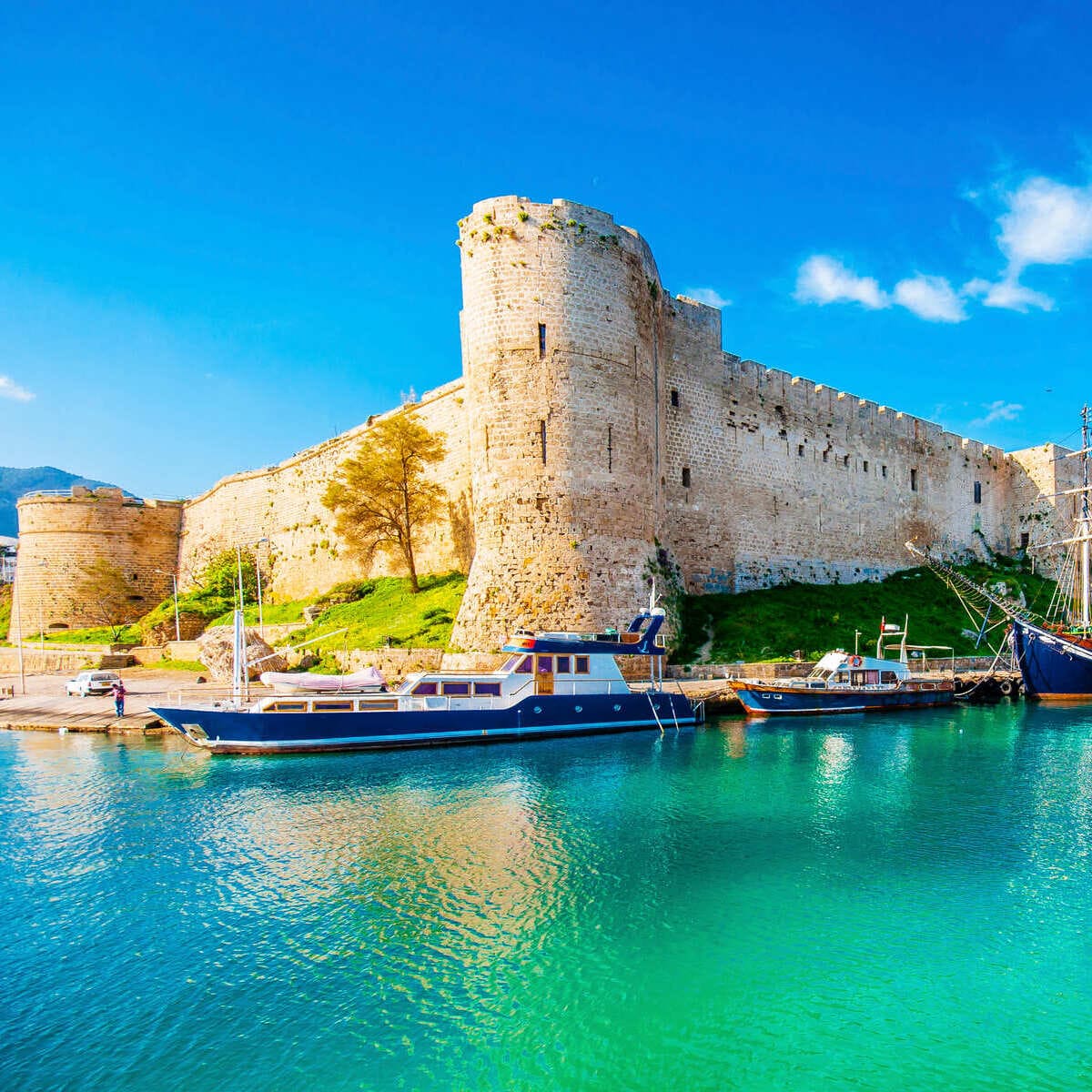
- Girne (also known by its Greek name Kyrenia): a picturesque harbor town complete with a castle and a lively marina, a short half-hour drive from North Nicosia
- Bellapais: a ruined Gothic monastery perched on a hill with stunning views over the Mediterranean that found itself on the wrong side of the border upon the division of the island
- St. Hilarion Castle: a mountaintop crusader fortress that’s partly ruined, though staircases, sole-standing arched windows, and bailey walls survived
- Karpaz: the ‘finger that stretches out’, and northernmost peninsula in Cyprus, popular for its golden-sand beaches and quaint resort towns
- Famagusta: a walled old city built around an impressive Othello Castle, a Venetian fortress linked to the Shakespearean play, and the ruins of Salamis, an ancient Greco-Roman city
Recently, Northern Cypriot authorities reopened the ‘ghost town’ of Varosha, abandoned since the invasion, for the first time in 50 years.
Previously a militarized zone, it is now being redeveloped to the tune of $10 billion, and soon enough, Northern Cyprus will have an Ayia Napa to call its own, or at least that’s the plan.

Cyprus In Schengen In 2026
Those are all reasons enough for 2026 to be the Year of Cyprus, but there’s so much more in store: the small country’s got the wheel right now with its six-month stint as the rotating Presidency of the European Union, and it’s surely pushing its own agenda.
Other than leveling up as a key Mediterranean player, Cyprus is gunning to go full Schengen by year’s end, which means ditching those border hassles for EU travelers and locking in tighter Euro integration, fingers crossed.
As far as reunifying the island goes, we’re talking years, maybe decades from a done deal, but hey, at least the presidency’s got folks talking again.

The Travel Off Path Advantage: Your Travel Toolkit
Subscribe To Our Latest Posts
Enter your email address to subscribe to Travel Off Path’s latest breaking travel news, straight to your inbox.