
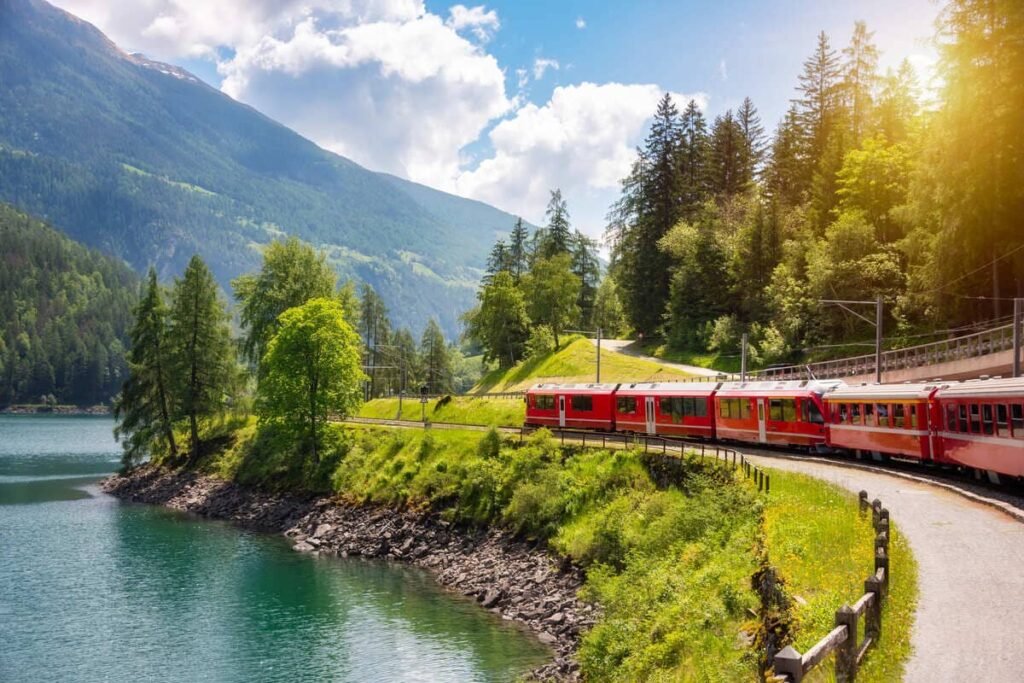
We’re sure you’ve heard that old proverb ‘kill two birds with one stone’ at some point?
If we’re thinking international travel, there’s nowhere better to apply it than Europe, a continent that has, for the most part, completely abolished internal passport checks, and where crossing internal borders feels as smooth as riding the Amtrak from New York to Boston.
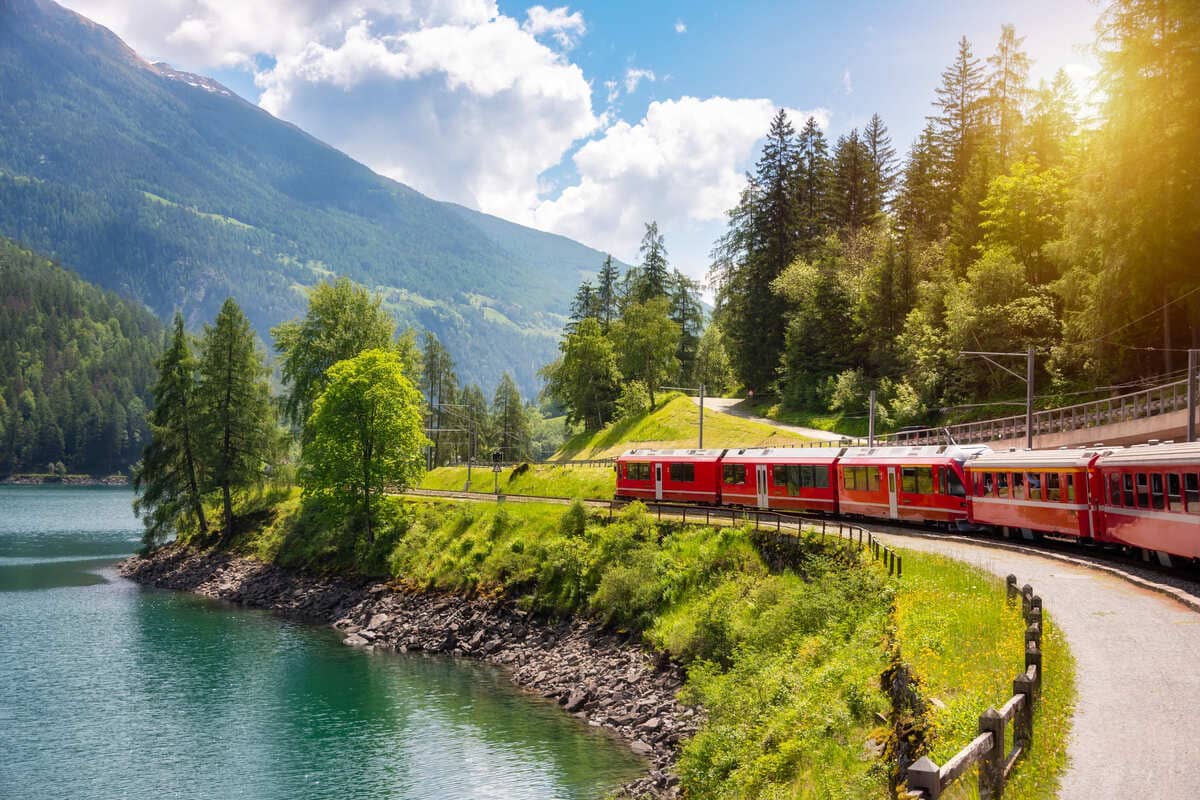
You’ll barely notice you’ve left France for Germany. Well, until the road signs start changing, and you whoosh past the first German beer huis with an elaborate font and flowery motifs.
On this side of the pond, taking a day trip to a foreign country is far from sounding like the far-fetched idea it would be Stateside—unless, of course, you live close to the Mexican or Canadian borders, and even then, major cities are usually a few-hours drive.
Thing is, if you’re visiting any of these incredibly popular cities listed below, you can hop over to another equally stunning city in a different country, and be back in time for dinner like it’s no big deal:
From Nice, France…
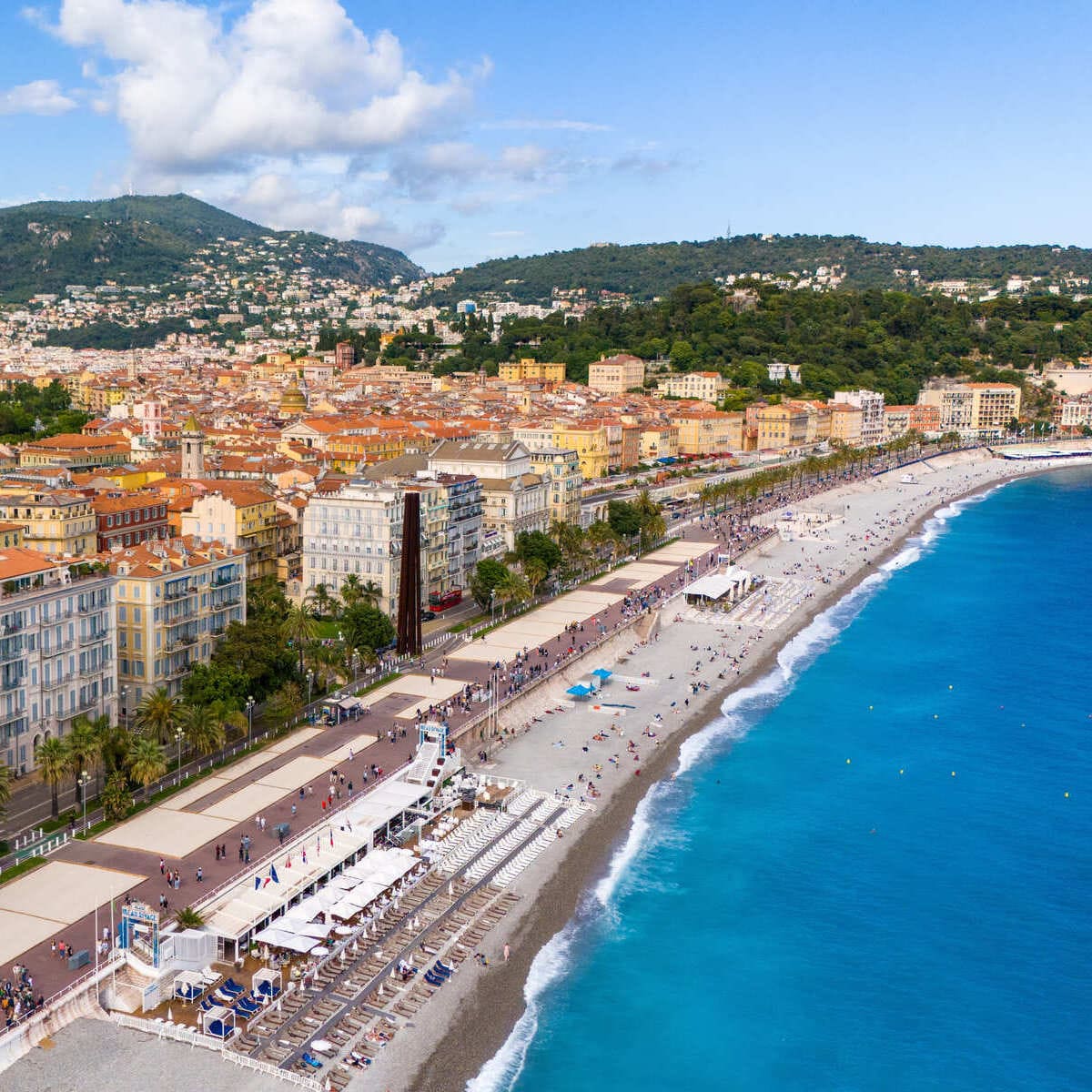
Nice is one of the most popular summer destinations on the Mediterranean for Europeans and Americans alike:
The gorgeous, pastel-colored Vieux-Port, with its medieval alleys and decades-old brasseries, the long Promenade des Anglais, unfolding along the most turquoise waters you’ve ever seen, and oh, don’t get us started on the amazing seafood.
For those staying in the Old Port, Peixes is a well-frequented seafood eatery with a menu built around freshly-caught fish, often served in tapas-style portions. Perfect for a night out in town if you’re traveling in a group!

Nice is nothing short of the embodiment of Côte d’Azur charm, and you sure wouldn’t be mad if this side of the Riviera is all you got to see next summer. There’s plenty of charming places, hidden vias to explore, and monuments to marvel at, anyway.
Old Town Nice is one of the largest historic centers in Europe, and in case you’re wondering why it looks so inexplicably Italian, well, you should know this part of France is closely intertwined with the southern vicino. What if we told you, however, that you can easily visit actual Italy from Nice?
Behold Ventimiglia, only 50 minutes by train from Gare de Nice-Ville:
…to Ventimiglia, Italy
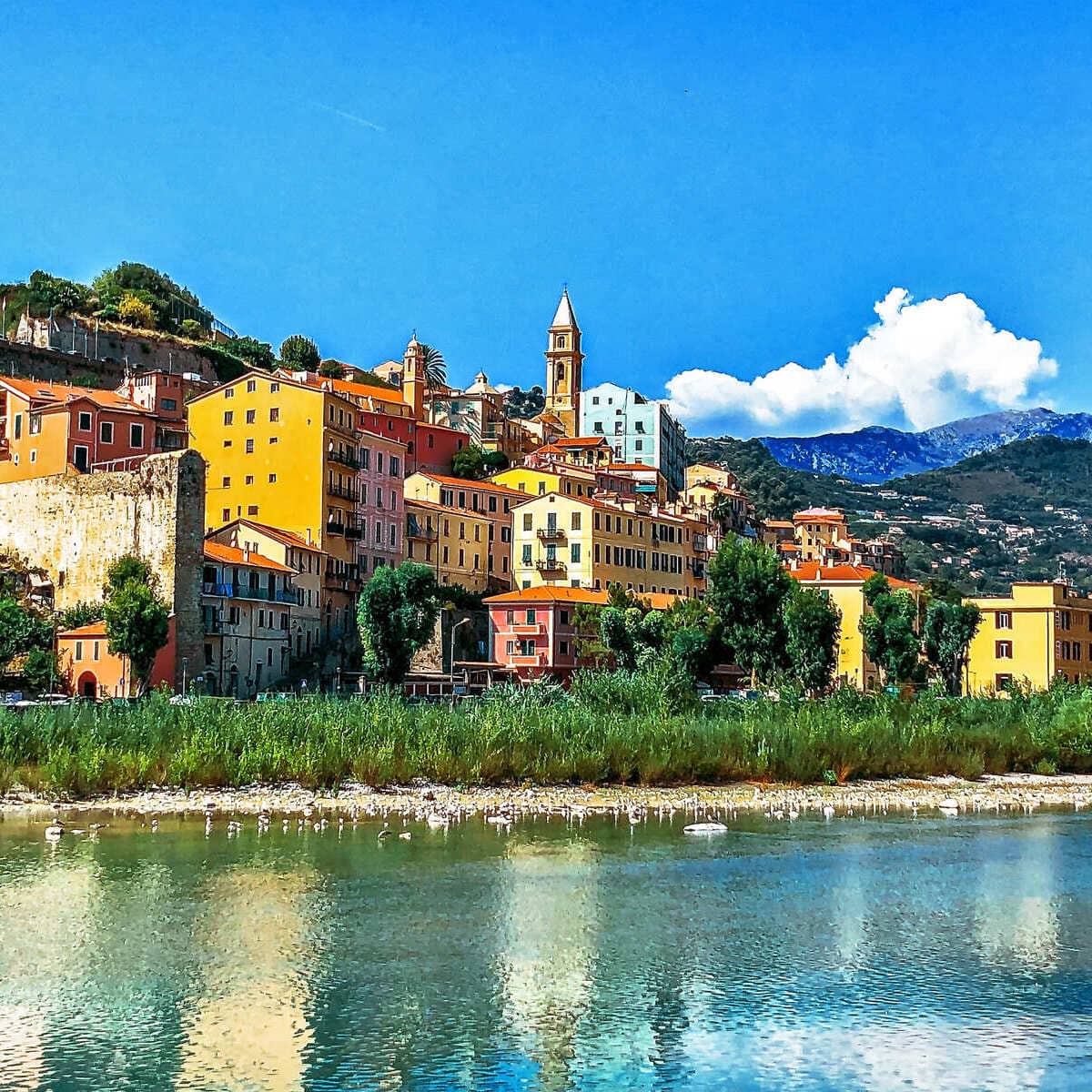
The first stop after the fairytale French border town of Menton, Ventimiglia is Italy without the usual crowds, faux politesse, and American-adapted prices.
Split between an elegant Lower Town, cut through with wide boulevards, lined with 19th-century edifices, and a medieval, less-polished Higher Town, where cobble-paved lanes framed by arches lead to Romanesque churches and ancient courtyards, it is a pearl of the Med yet to be discovered.
Don’t miss Belvedere Resentello, a prominent viewpoint with breathtaking views over the coast, and the Santa Maria Assunta Cathedral: unassuming on the outside, it hosts a rare built-in baptistery. Usually, they’re separate buildings in the vicinity of a church.

Before we forget, Monaco’s of course a quick 25-minute train hop from Nice, so if you’ve got time to squeeze in a peek at the glitzy little principality en route to Ventimiglia, knock yourself out.
Getting From Nice, Italy To Ventimiglia, Italy
- Direct TER trains available from Gare de Nice-Ville
- The journey takes around 50-55 minutes
- Make sure you carry a passport as there are usually police at the border in Menton
- $5–7 one-way
- Trains run every 30–60 minutes
From Vienna, Austria…

Vienna is a bucket list city for millions of travelers, and we definitely get it. Somewhere between the grand opera houses, the ornate style of the Baroque churches, which seem to lurk at every corner, and the soaring spires of Stephansdom, it will steal your heart faster than you can say bratwurst.
If you’re more of a foodie and the most magnificent output of imperial European architecture doesn’t really do it for you, rest assured, Vienna’s still got you covered:
Check out a colorful Naschmarkt for bio-friendly products and the best Viennese sausage (würstel) you’ll probably have in your life. Over in the 16th district, Brunnenmarkt is every wiener‘s go-to spot for international street food. Kebabs, rolls, sushi: you name it, they’ll have it.

For a sit-down meal in traditional Viennese style, Figlmüller is the safest pick. Known for their legendary schnitzel, probably bigger than the average person’s head, and a vast offer of draft beer, it is a local favorite right in the city center.
Once you’ve finished eating your way through Vienna and exploring every opulent chamber and fountain-dominated garden in Schönbrunn, how about you top it off with a half-day visit to an offbeat Bratislava?
…to Bratislava, Slovakia
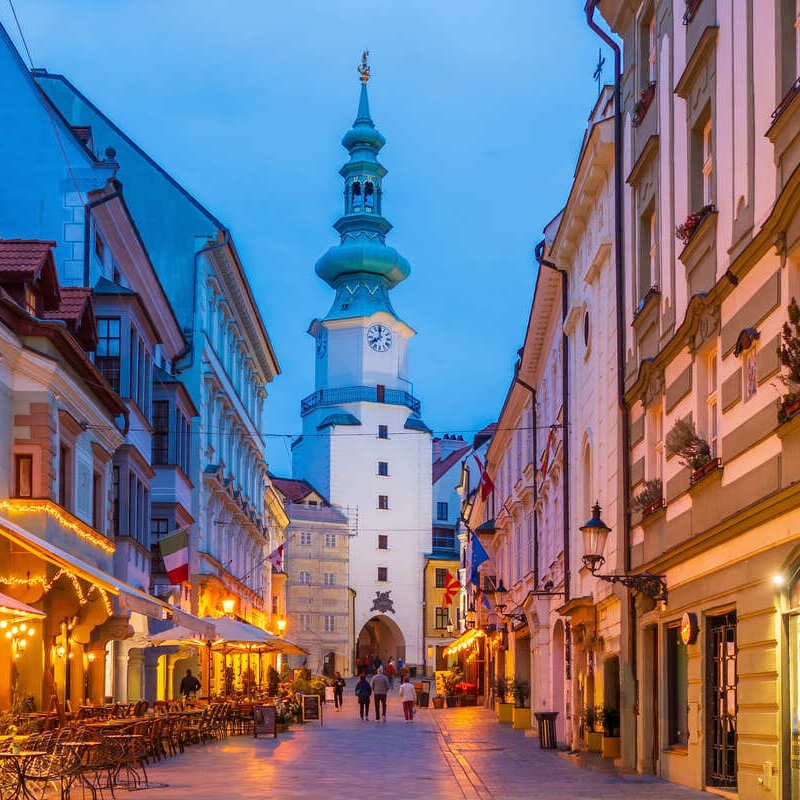
Millions of travelers will flock to Vienna every year, and millions of them will bypass the Slovak capital, just 55 minutes by train from the Central Station.
There are only 50 miles separating both capitals, but nothing screams Europe quite like leaving Vienna’s Habsburg-era palaces behind, and watching as the train pulls up to a much-smaller, 15th-century, copied-and-pasted Bratislava on the shores of the Danube.
Located at the foot of a landmark whitewashed castle, and with a maze-like center, criss-crossed by winding pathways and surrounded by imposing walls, Bratislava is the perfect antidote to bustling Vienna—and a much-needed budget breather.

We probably wouldn’t be staying in Bratislava for the weekend, as you can probably see the highlights in a morning, but you can’t really stay mad at generous meat-and-potato platters and a whole jug of beer for around $16.
Getting From Vienna, Austria to Bratislava, Slovakia
- Direct trains available from Wien Hauptbahnhof
- The journey takes around 55–60 minutes
- Passport checks aren’t routinely carried out, but make sure you carry valid documentation at all times
- $15–20 one-way
- Trains run every 30–60 minutes
From Copenhagen, Denmark…

Amsterdam’s spiritual sister, Copenhagen, is yet another picture-perfect lowland capital home to a colorful harbor, lined with centuries-old buildings painted in bold colors, hippy districts where libertarianism is not only enshrined in law, but a lifestyle, and a thriving café scene that embodies hygge.
If you’re wondering what that is, it’s an untranslatable Danish word which means ‘to create a warm, inviting atmosphere‘, or ‘enjoying the good things in life with good people’.
For Danes, that’s the equivalent of popping round to the nearest Espresso House, ordering a large mug of creamy, steaming-hot chocolate and a fluffy cinnamon roll that tastes nothing like the industrialized junk you get at Wendy’s, and wistfully tittle-tattling the afternoon away with a confidant.

Hygge culture is a good-enough reason to fly out here, but wait until you’ve wandered the graffiti-covered streets of Christiania, admired the regal palaces overlooking downtown Copenhagen’s scenic canals, and gone for a ride or two at Tivoli Gardens, one of the oldest amusement parks in the world.
Oh, unless you’re a geography buff and you know your way around a mapa mundi, you’d probably expect the capital and cultural heart of Denmark, one of the most influential Nordic countries, to be located somewhere around the center of the national territory… right?
After all, capitals are meant to be the exact point where railway lines flow into, roads converge, and highways funnel.
Well, it turns out the capital of the Kingdom of Denmark is located on the eastern fringe of the country, on the island of Zealand, a stone’s throw away from the Swedish mainland.
To avid explorers out there, this can only mean one thing:
…to Malmö, Sweden

Believe it or not, the city of Malmö in Sweden is only about a 35‑minute train ride from Copenhagen, and the coolest part is you get to cross the iconic Øresund Bridge, a part‑bridge, part‑tunnel link that hops over the sea between the two sister cities.
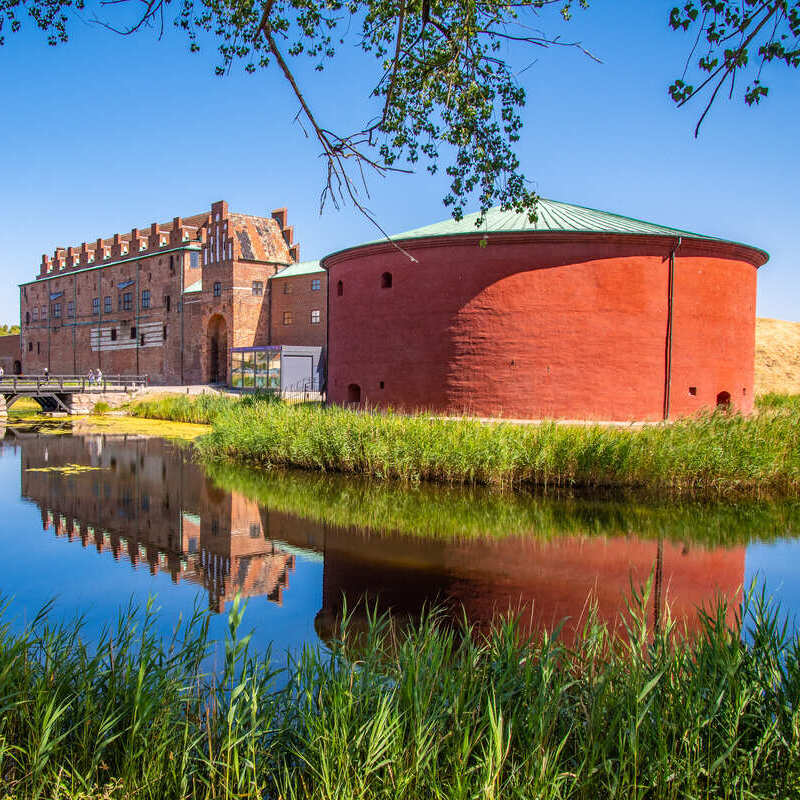
Once in Malmö, you can tour Malmö Castle, a brick-red 16th‑century moated fortress originally built under Danish rule, or wander the cobblestone streets of Lilla Torg, the city’s atmospheric historic square.
Here you’ll find classic Northern European timbered houses, shops selling local handicrafts, and picturesque little squares lined with characterful coffee shops and bars.
Malmö is no lightweight, either: it is the third-largest conurbation in the country, after Stockholm and Gothenburg, with a population of over 350,000 people, so it definitely won’t feel like a ‘cheat’ visit to a minor border town just to say you’ve ‘been to Sweden’ for a few hours.
Getting From Copenhagen, Denmark to Malmö, Sweden
- Direct trains available from København H (Copenhagen Central Station)
- The journey takes around 35 mins
- Ensure your passport is on you as border checks can take place on the Danish side
- $12–20 one-way
- Trains run every 10–20 minutes
Other Sister European Cities:
Paris, France → Brussels, Belgium
Paris, France and Brussels, Belgium are separated by a one-hour TGV train, making it very convenient for travelers based on either one of the two to visit the neighboring capital for the day. One-way tickets range from $33 to $82, depending on how far ahead you book.
Munich, Germany → Salzburg, Austria
If you’re in Munich, Germany, and you wouldn’t mind checking out Mozart’s birthplace, and prancing around Sound of Music filming locations like you’re Julie Andrews, the shortest train journey takes about 1h30. Tickets cost as cheap as $19 when booked in advance.
Helsinki, Finland → Tallinn, Estonia
Helsinki and Tallinn sit on opposite sides of the Baltic Sea, but they’re well-connected by frequent fast ferries that operate daily. The shortest crossing takes 2h, a tad longer than most journeys cited on here, but still feasible if you don’t want to miss out on Tallinn’s fairytale-like townscape.
Strasbourg, France → Freiburg im Breisgau, Germany
By virtue of straddling the German border, Strasbourg is an easy day-trip away from several West German cities. However, our top-pick has to be Freiburg, a postcard-ready historic town just over an hour away by train, cut through by cobblestone streets and dominated by a soaring Gothic cathedral.
One-way tickets from Strasbourg to Freiburg average $10–30 depending on route and railway operator.

The Travel Off Path Advantage: Your Travel Toolkit
Subscribe To Our Latest Posts
Enter your email address to subscribe to Travel Off Path’s latest breaking travel news, straight to your inbox.