
If you’re even half the Europhile we are here at Travel Off Path, chances are you’re already browsing for Transatlantic flights now that spring’s right around the corner, and Europe’s gloomy weather is finally dissipating.
Let’s face it: now’s truly the best time to hop across the pond, before the blazing summer sun scorches the earth, prices shoot through the roof, and the cruise hordes swarm ashore.
If you’re flexible and you’re yet to map out where to go, how about an offbeat European island untouched by mass tourism? You know, one that still feels authentically local and lived-in (unlike your Mallorcas and Santorinis), and where you can actually soak up all that Old World charm in peace.
Did we say one? Sorry, we actually meant five:
PLUS: We’ve built an interactive quiz for you at the end of this article to find your perfect match. Scroll to the bottom to try it out!
Aegina, Greece
The pearl of the Saronic Gulf, a short 50 min ferry hop from the Port of Piraeus (the one that serves Athens), Aegina is all the Mamma Mia ̶s̶u̶m̶m̶e̶r spring you need.
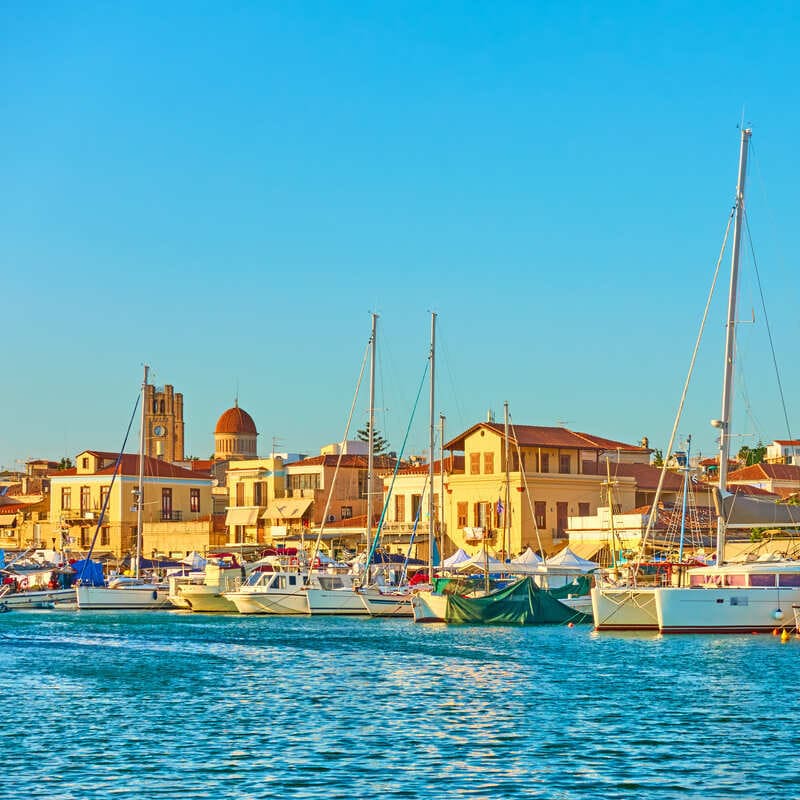
Aegina Town, the main settlement on the island, is a colorful harbor featuring gorgeous Neoclassical buildings in lovely pastel colors, family-run seafood tavernas, and shops selling Aegina pistachios pretty much everywhere you look.
Speaking of, Aegina is the pistachio capital of Greece, and the local shell-covered seed found here actually has protected status. From gelato to pastries to liqueur and even pesto, you’ll find it in every imaginable form and shape.
If you’re here for the beaches, Agia Marina is one of the longest ones on the island, roughly 9 miles from the port.
Rent a bike, hit the coastal road headed northeast, and you’ll soon find a beautiful stretch of golden sand unraveling in the distance.
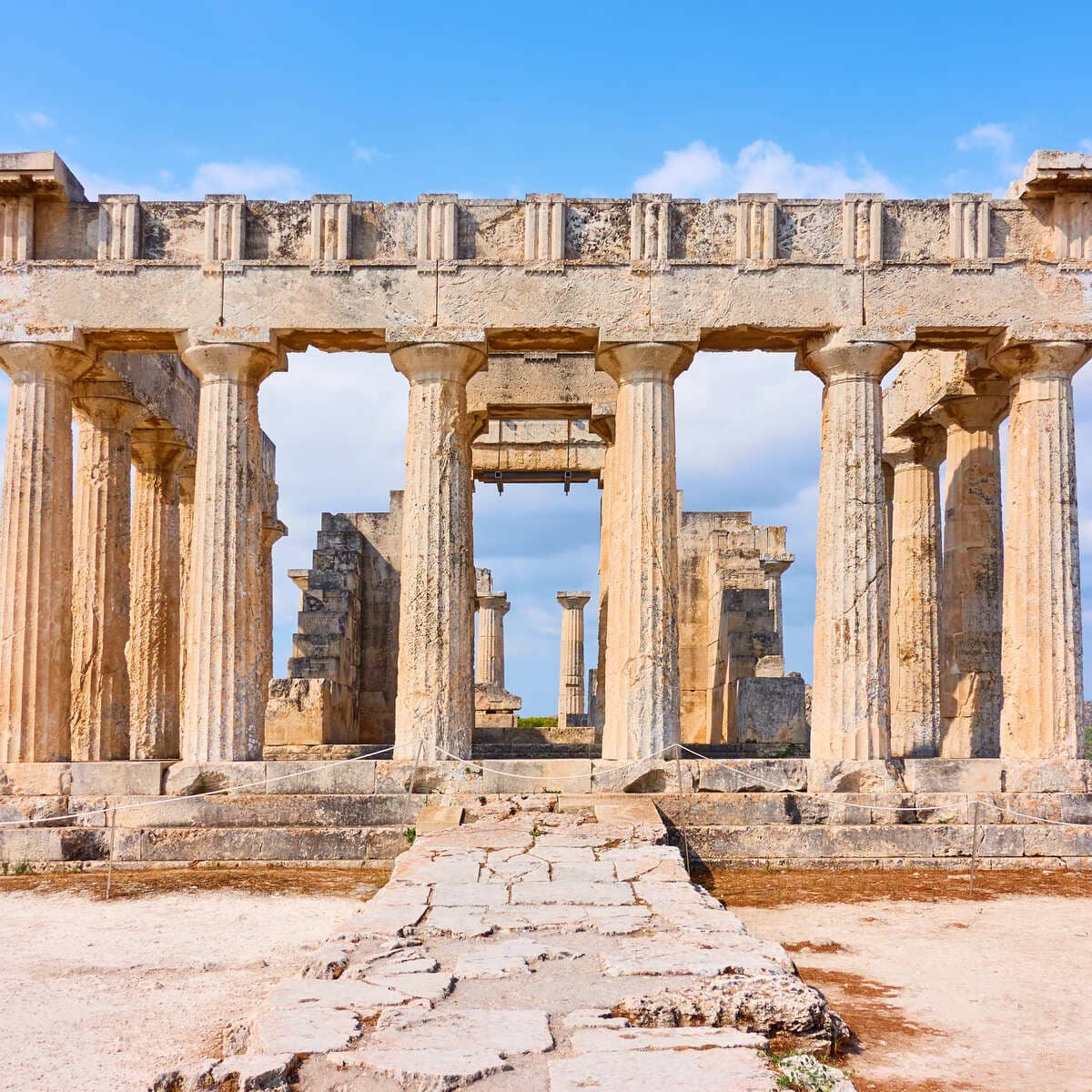
Came to Greece for the ancient culture? The 2,526-year-old Temple of Aphaia, perched on a hill with breathtaking views over the Saronic Gulf, is one of the best-preserved in Greece. In fact, it forms a ‘Sacred Triangle’ with the Parthenon in Athens, and the Temple of Poseidon at Sounion, except…
None of the usual crowds!
Bornholm, Denmark
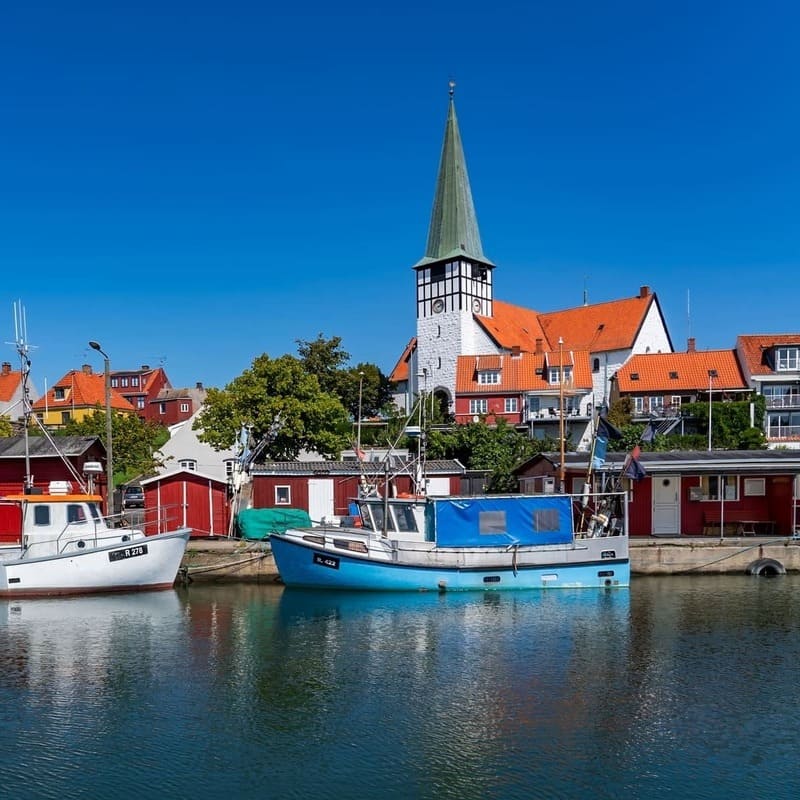
Bornholm may be an island under Denmark, but given the fact that it lies off Sweden’s coast, somewhat detached from the Danish archipelago, and its unique hilly geography, a casual observer could easily mistake it for a Swedish island instead.
You see, most of Denmark is flat farmland and Holland-style dredged canals to keep the rising seas at bay. There’s definitely no significant elevation, or the kind of jaw-dropping nature you might associate with Scandinavia.
Bornholm feels like an entirely different country:
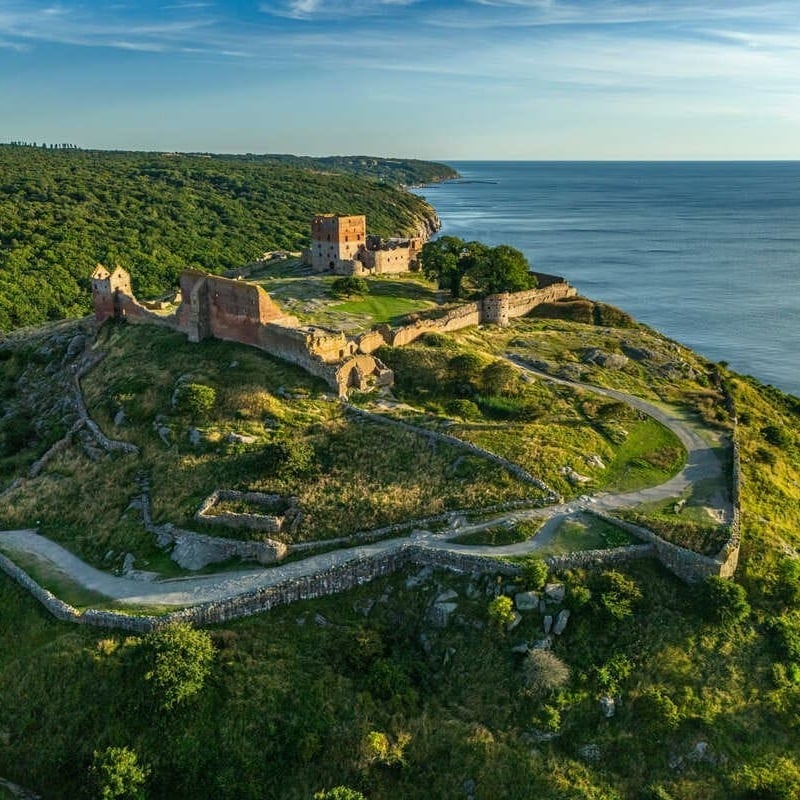
Along the coast, it’s mostly rocky cliffs and towering granite sea walls, whereas inland, you get lush pine forests and hillier terrain. Needless to say, the whole island’s like a hiker’s paradise for nature enthusiasts, and the best part?
Thanks to those allemansrätten Scandinavian laws governing nature use, most land is free to roam—though stricter rules on camping do apply—and there are barely any tourists out to crowd the gorgeous Baltic views or litter the place.
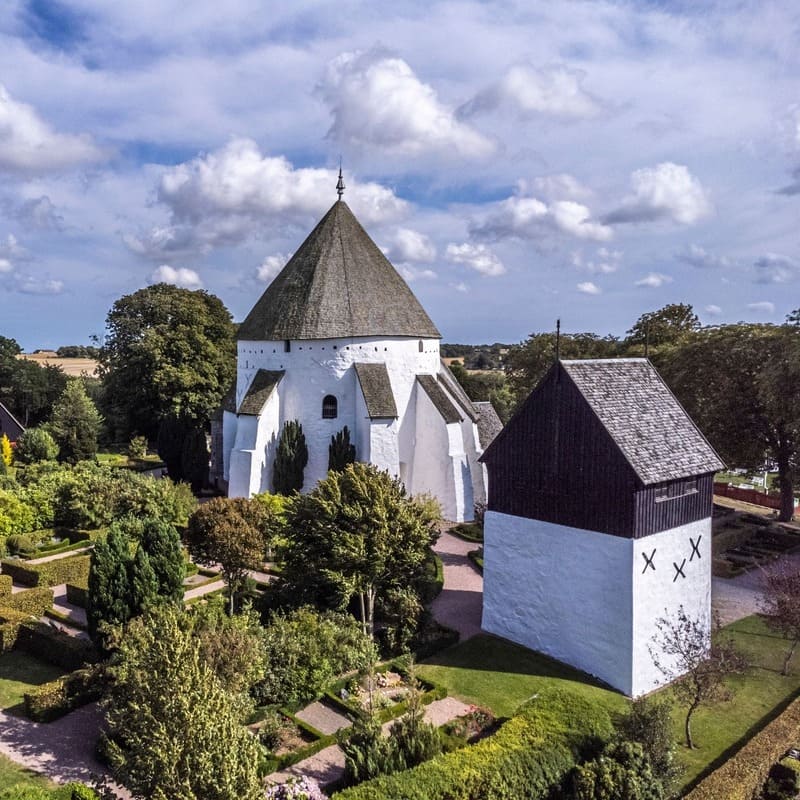
On top of that, Bornholm is home to four rare fortress-like round churches, most notably Østerlars, and one of the largest medieval ruins in Northern Europe: Hammershus, a former citadel, or what’s left of it, resting on the cliffs above the Baltic Sea.
That said, all that wild nature and beautiful ancient stuff comes at a price. Bornholm isn’t exactly the easiest place to get to.
There’s a reason why people jokingly say Bornholm feels indeed more Swedish than Danish. Most people drive from Copenhagen into Sweden, crossing the Øresund Bridge, and take a ferry from the Swedish port of Ystad (overall, the journey takes 3 hours in total).
Alternatively, there’s a night ferry leaving from Køge, Denmark (5.5h), or a shorter ferry from Sassnitz, on the German coast (1.5h).
Île d’Oléron, France
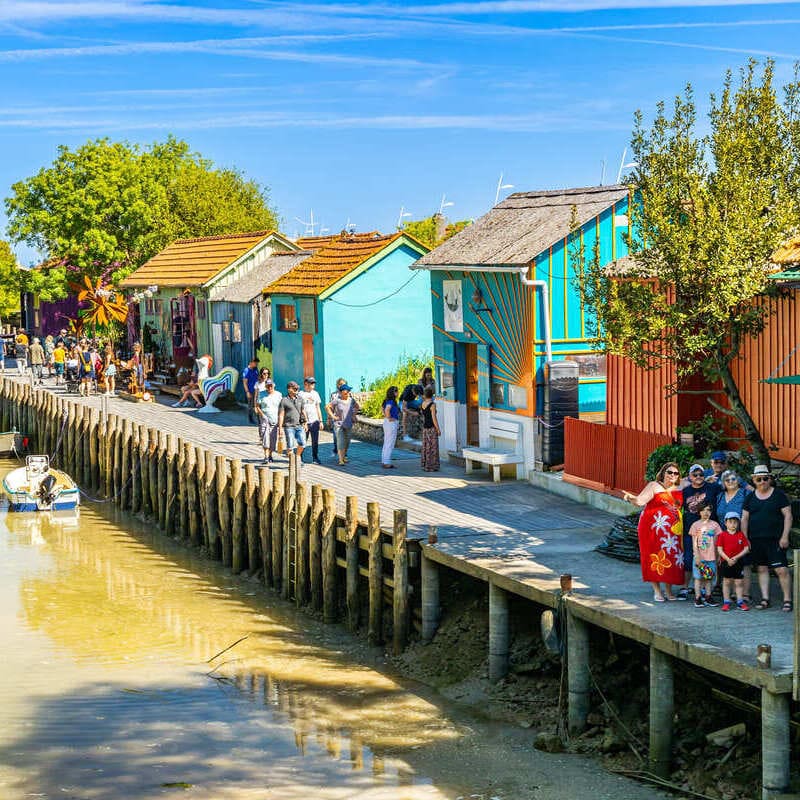
Similar to the increasingly trendy Île de Ré, which we’ve written about at length here, Île d’Oléron is an offbeat French island offshore from Brittany, on the west coast of France.
Unlike Bornholm, it’s a lot less complicated to get to, thanks to a bridge that ties it permanently to the mainland. That’s not to say it’s not a long way to travel, especially from Paris (5h38), but hey, no getting on and off ferries is already a major win.
We digress.
What has this secret French island you’ve probably never heard about got to offer? Well, how do pine forests crisscrossed by cycle paths, unruffled dunes and sandy beaches, and quaint fishing towns with no beret-clad Instagrammer in sight sound?
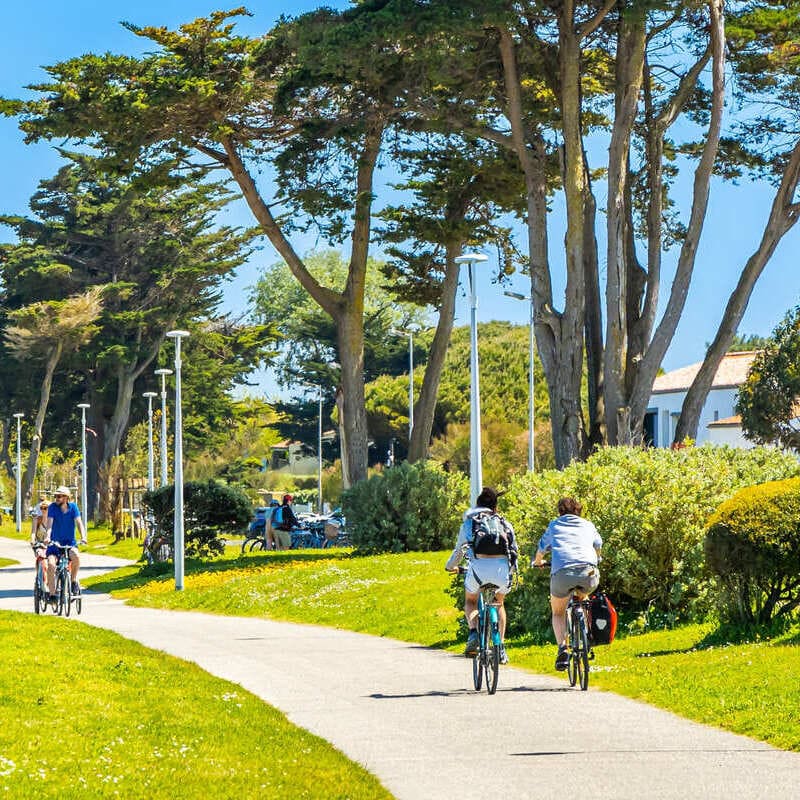
The capital and largest town, Saint-Pierre-d’Oléron, is where you go for that warm, neighborly welcome to the island: bustling harbor, shops, cafés, and weekend farmers’ markets loaded with every local product under the sun, from goat cheese to freshly-caught oysters.
Side note: Oléron is basically France’s oyster capital, and you won’t find’em tastier or fresher than at Auberge le Saint Pierre.
It might be a little cool in April to swim in the North Atlantic, but if you’re up for a relaxing coastal walk, Plage de Gatseau is a wide sandy beach, hugged by shallow, gentle waters.
You may even spot brave locals sprinting into the surf with wetsuits on. Just keep in mind this is not the South of France, and those beautiful, bright-blue waters you see off the coast are not the warm Mediterranean.
Try dipping your toes first, see how you feel about it before running after them.
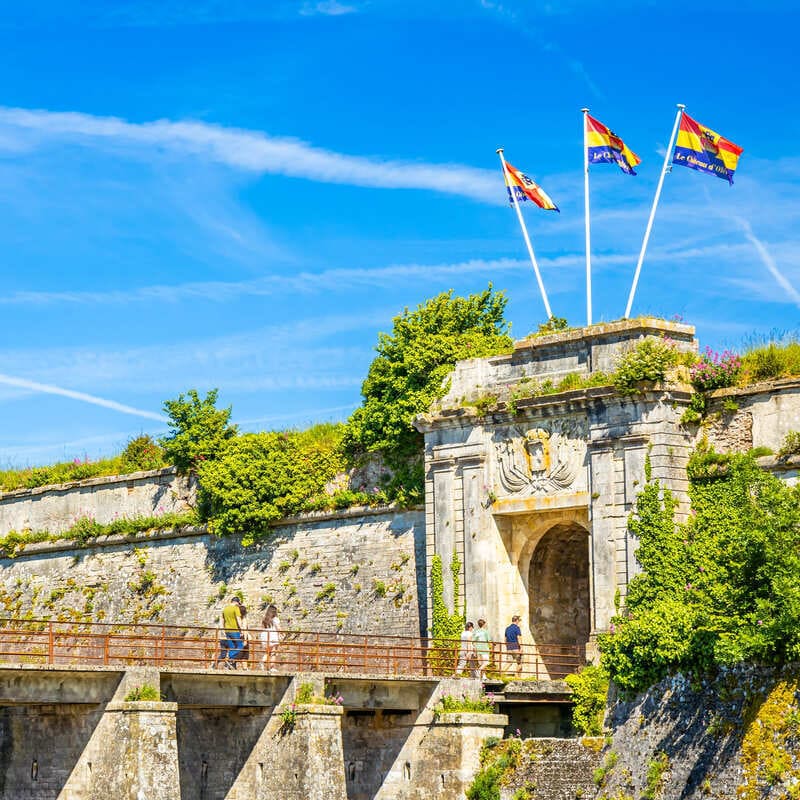
Of course, it’s not a French island without a château, and over at Le Château-d’Oléron, a picturesque coastal town, you can visit a monumental star-shaped fort built in the 1600s. There are also excellent seafood restaurants and oyster farms nearby.
Ponza, Italy
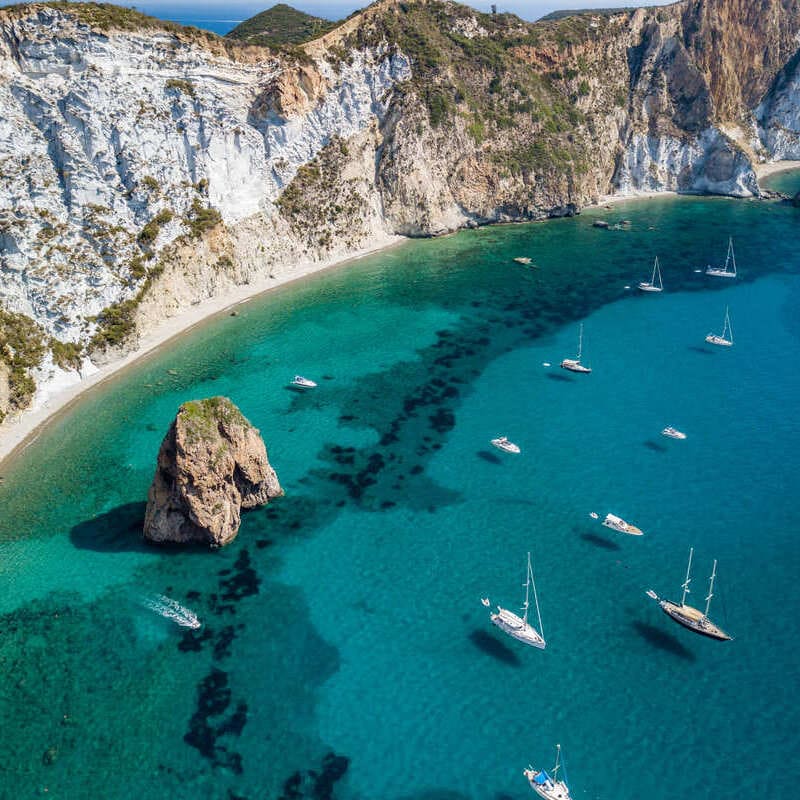
Forget Capri and its invite-only, celeb-frequented beach clubs and jam-packed spiaggie: if it’s a tourist-free, tucked-away Italian gem you’re seeking, you should probably check out Ponza, the largest landmass in the Pontine archipelago, some 23 miles from the nearest mainland at Anzio.
Getting there isn’t exactly a breeze, whether you’re traveling from Rome or Naples—add to that a short train, then a couple of hours by hydrofoil—but the minute you step off that boat, the island’s unspoiled charm makes every stressful minute of travel worthwhile.
Rugged cliffs plunging straight into the clear turquoise waters of the Tyrrhenian Sea, hidden coves that can only be reached by small boat, and timeless coastal towns lined with them traditional skinny ocher-colored townhouses…
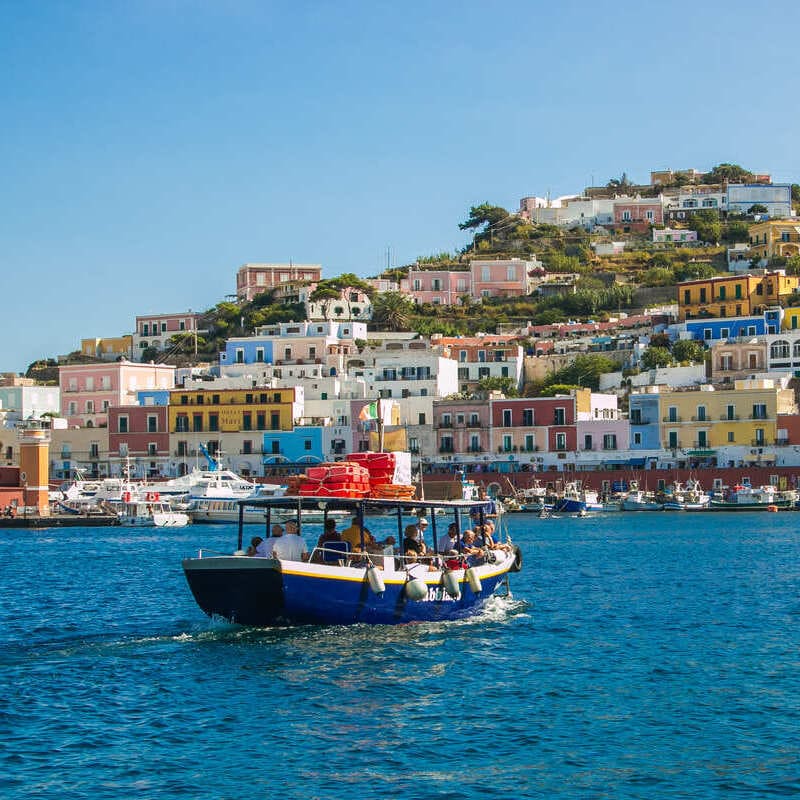
Yes, the ones with the green shutters, you know, from the postcards.
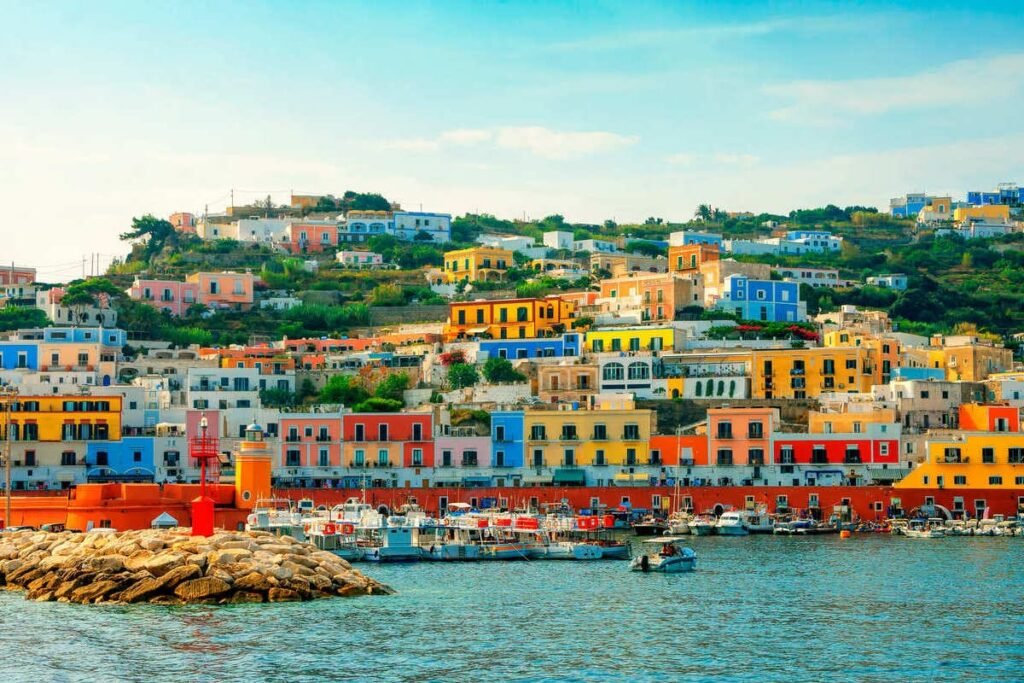
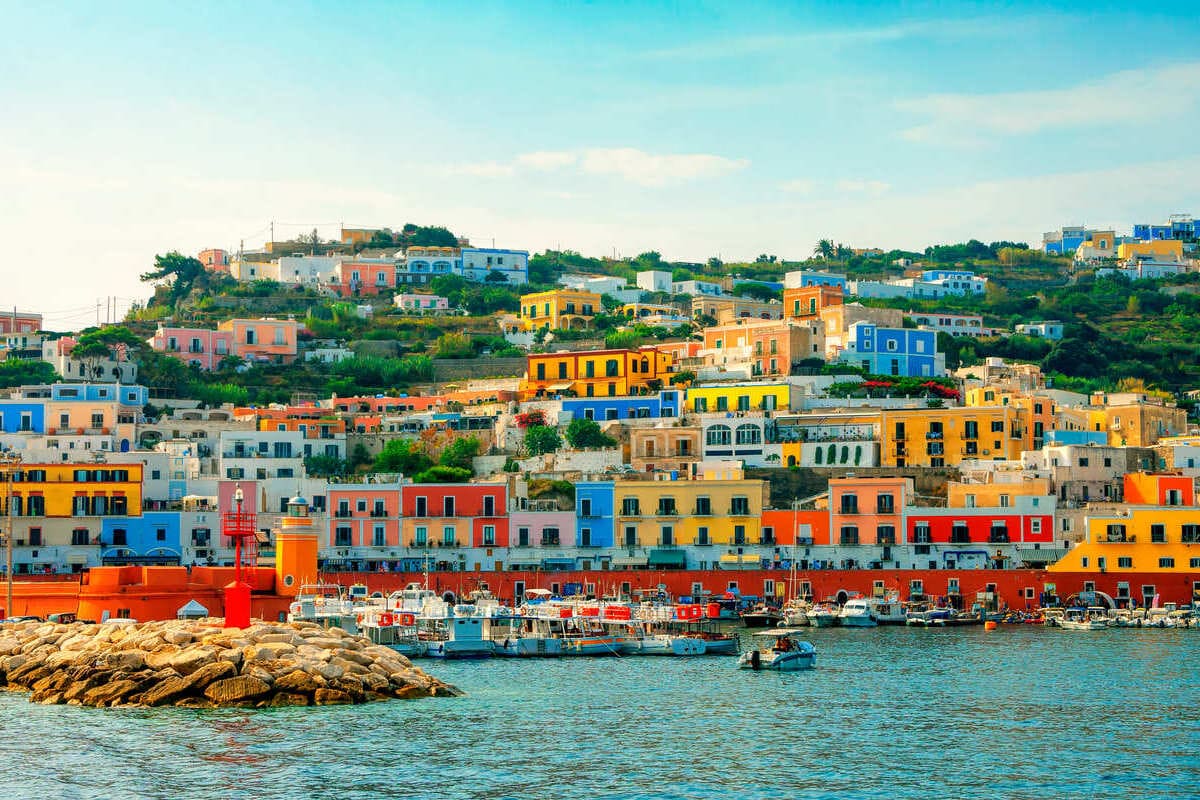
The main town, Ponza Porto, is the island’s heartbeat. Picture a boat-fringed harbor, gelaterie and seafood trattorie galore, colorful houses hanging from coastal cliffsides, and small boutiques.
The perfect day in Ponza Porto consists of grabbing an espresso on the quayside, watching fishermen bring in their daily catch, then strolling the lively backstreets before swinging by Buco Divino for a casual, but quality lunch.
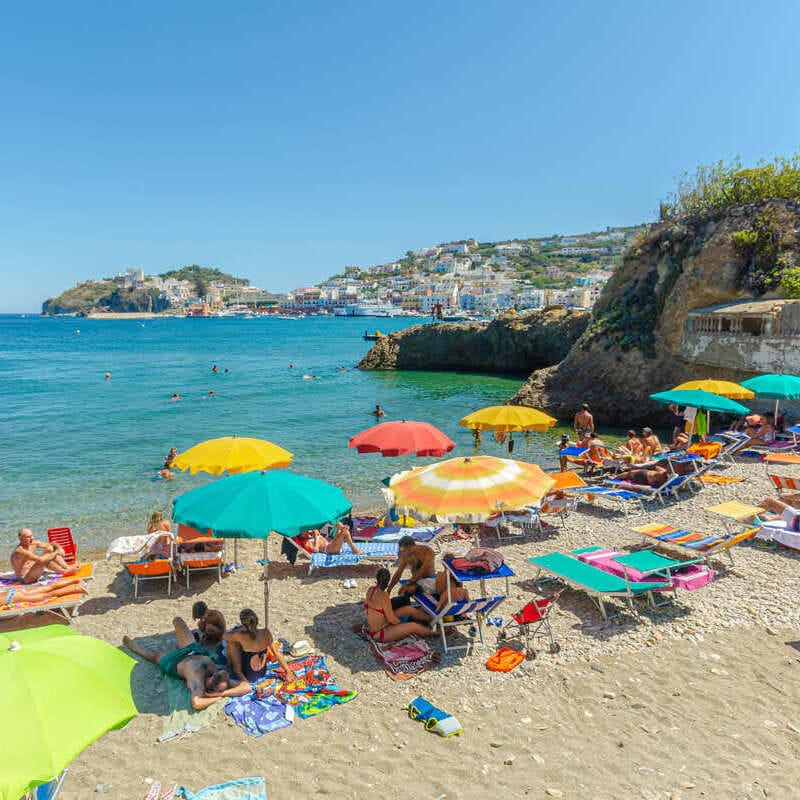
When it comes to beaches, the most beautiful, and arguably more tranquil, is the crescent-shaped Chiaia di Luna. It’s where locals themselves will flock to on the odd-hot spring day, either for an early-season swim or simply to bask in the sun.
Due to Ponza’s rugged nature, there aren’t that many sandy stretches on the island, but Chiaia di Luna is a rare exception: here, you’ll be greeted with soft sands, shallow waters at the edges, and clear blue seas.
A Illa de Arousa, Spain
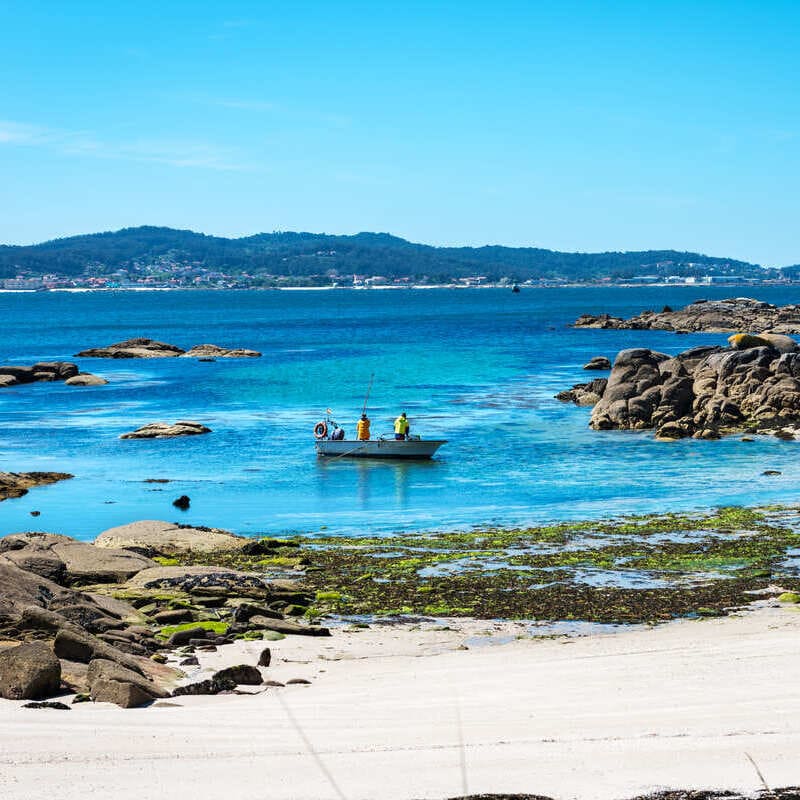
The only island-municipality in Galicia, A Illa de Arousa, or simply Arousa, is a low-key gem of northwestern Spain, where you go to unwind and soak in their slow, coastal life.
With tidal estuaries, reed-lined inlets, sandy coves kissed by calm Atlantic waves, and small fishing villages still largely untouched by tourists—like much of Galicia, for that matter—Arousa is the serene Transatlantic escape you’ve been dreaming of.
The island is sparsely populated, with fewer than 5,000 residents, so it doesn’t really have a “main town.” Think of it like neighborhoods or parish districts that together form a single community.
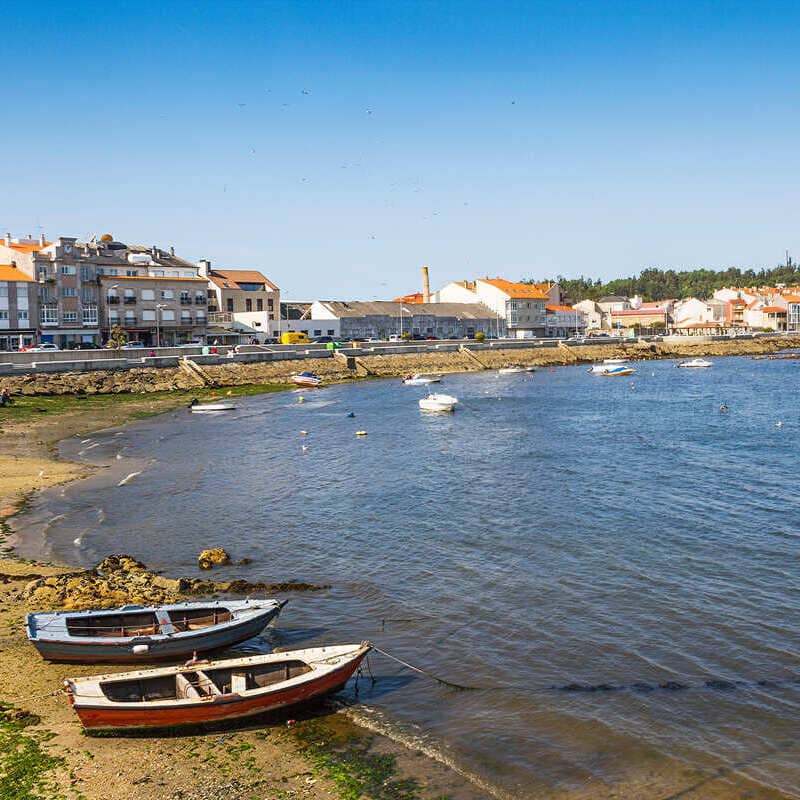
Out of those, Carril is perhaps the most important, thanks to being the busiest port and primary landing point. It’s probably where you’ll make landfall if crossing by boat from the mainland.
That said, administratively, San Xulián da Illa de Arousa is the parish and main town, where most local services, shops, and the town hall are centered.
All around the island, it’s whitewashed houses, narrow streets, and that unmistakable maritime vibe you can feel in every corner. Arousa’s main attractions, however, are its wild beaches, often lined with soft, golden sands and calm waters.
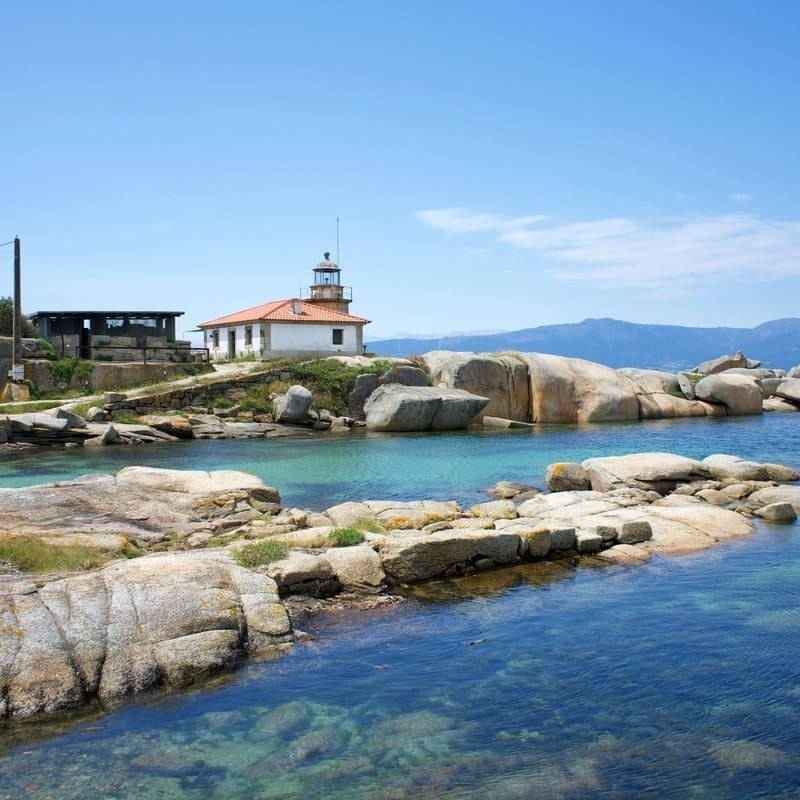
Now, this is the northwest of Spain, not the Mediterranean, so you might want to test the waters before diving in. For those coming later in the season, say early May, try Area da Secada or A Lanzada—hands down the best swimming spots on the island.
Naturally, no Galician getaway would be complete without a touch of history, and lucky for the culture buffs like us, all around the island, you’ll spot ancient stone chapels, small abandoned fortifications, and maritime watchtowers that date back centuries
How to get to this off-path slice of paradise, you ask? Drive or take local transport from Pontevedra or Santiago de Compostela (which will soon host nonstop flights from Newark) to the ferry dock at Vilagarcía de Arousa, then hop on a short ferry ride to Arousa (5–10 minutes).
Now take this quiz to find your perfect match!