
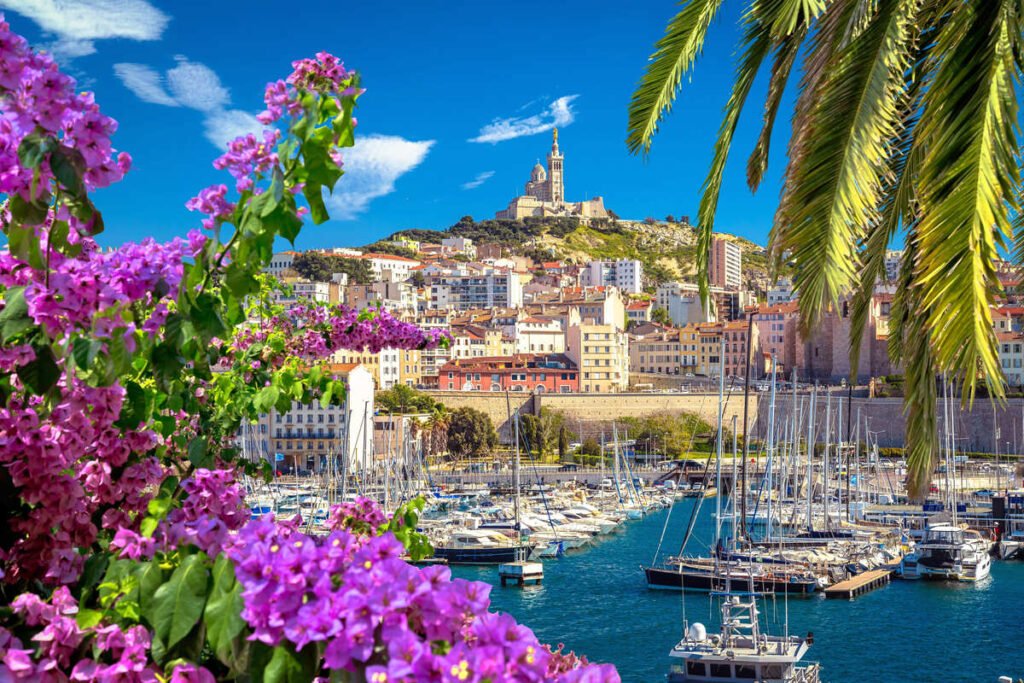
Is it just me, or has all this talk of “hidden gems” and “undiscovered spots” become a bit too… trivial, if not outright nonsensical?
Whether they’re doing it for the Instagram algorithm or simply because they’re clueless enough to think an extremely popular European city that’s been flogged to death can still fit that criteria, it’s all getting a bit comical.
First of all, if every single secondary, mid-size city American TikTokers stumble upon is a “hidden gem”, then by default, nowhere is. We get it, they’re usually ping-ponging between Paris and London, and anywhere else amounts to a great off‑path adventure, but come off it.
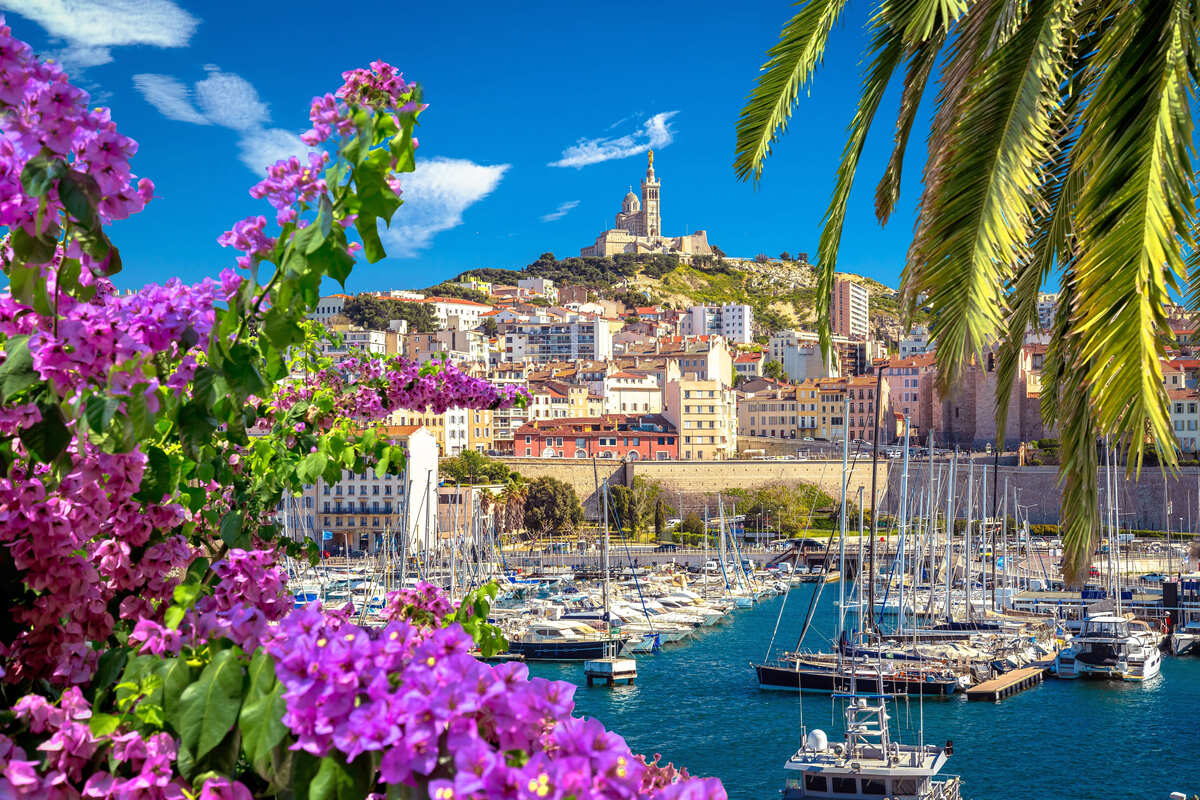
Secondly… Marseille? As in, France’s huge Mediterranean port city of Marseille?
This is really how far we’ve come in terms of lazy, poorly-researched, AI-spun travel writing?
Why Marseille Is Anything But A European Hidden Gem
I couldn’t believe my own eyes when I came across a bunch of articles, churned out by some major publications this year, crowning France’s second-largest city and a major cruising hotspot as Europe’s most criminally underrated coastal getaway, or a “top hidden gem”.
Marseille and crime do go hand in hand, but criminally underrated? Not so sure about that.
A metropolitan zone home to over a million people, wedged between Mediterranean massifs and the turquoise sea itself, Marseille has been France’s most important port for over 2,600 years.
Not that an iPhone-wielding, beret-clad influencer in her flying dress would know that, nor one of those big-brained journalists with degrees, apparently… but anyways, I digress.
Marseille hosts on average 5 million tourists per year, and it usually ranks third or fourth in France for popularity, behind Paris (30–35 million), Nice (5–7 million), and either tied with/or directly below Lyon (roughly 5 million).

In terms of cruise passenger traffic, it places third after Barcelona and the Balearic Islands.
Slapping the ‘hidden gem’ tag on Marseille is as ludicrous as calling, I don’t know, Los Angeles a secret coastal village. While we go around in circles in these useless discussions, everyone’s forgetting to ask the most important question.
What exactly sets Marseille apart from other French cities, if it can’t be anonymity?
If Marseille Is Not A Hidden Gem, Why Are They Labeling It One?
Well, it’s the fact that it’s not the sanitized, over-polished, Disney-fied France you know from the movies, and this is enough nowadays for a ‘Hidden Gem’ tabletop travel brochure seal.

It’s a city that lives and breathes at its own frantic pace, doesn’t care if you can’t quite keep up, and certainly doesn’t slow down to make itself more palatable for visitors.
If you’ve been to the French Riviera before—the “Nice‑r”, Turkey-teeth, Rolls Royce side of it—you should know Marseille is a different flavour of the Med altogether.
Out with the Côte d’Azur’s invitation-only beach clubs and star-studded, roped-off oceanfront; in with wild, rugged calanques and a beach-interspersed Corniche where everyone’s welcome for free. It looks messy, ‘foh shoor‘, to quote our darling President Emmanuel Macron, but it feels inequivocally democratic:

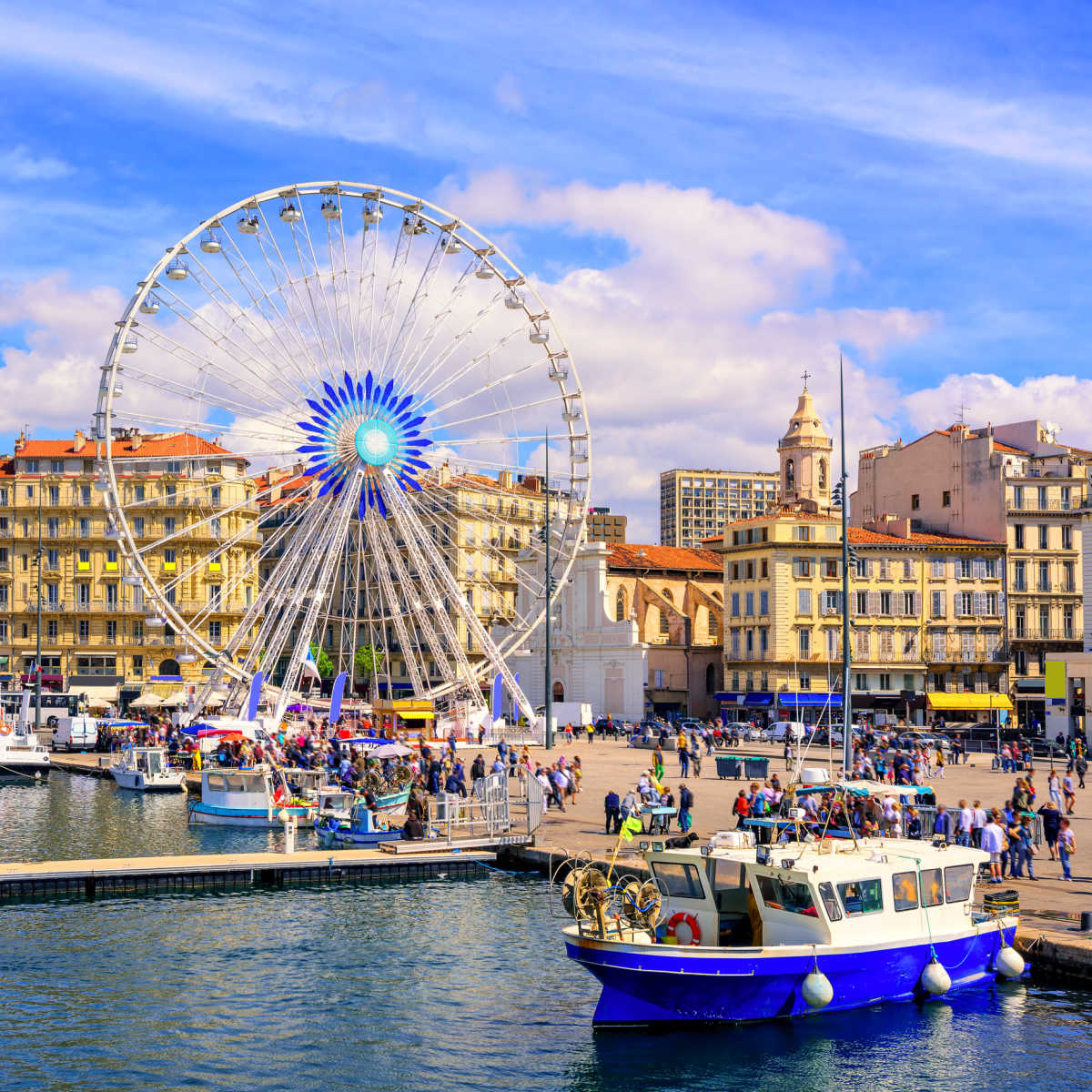
The Vieux-Port, or Old Port, is Marseille’s organized chaos personified: think cafés and seafood restaurants right on the water, fish markets, buzzing streets where no one seems to give a, hem, flying flamingo about road signs, and motorcyclists and cars instinctively weaving around pedestrians.
Because that’s the way it’s always been, and how it always will be.
Of course, the Vieux-Port is the heart of Marseille’s fishing scene, and where you can find some of the heartiest Marseillaise fish stews in town, or, as locals call it, bouillabaisse*. You haven’t been to Marseille until you’ve had one of these.
That said, portside eateries can be on the pricier end, but if you’re after a smaller, less‑flashy, local‑frequented alternative, try Chez Michel on Rue des Catalans.
If Unapologetic Was A City…
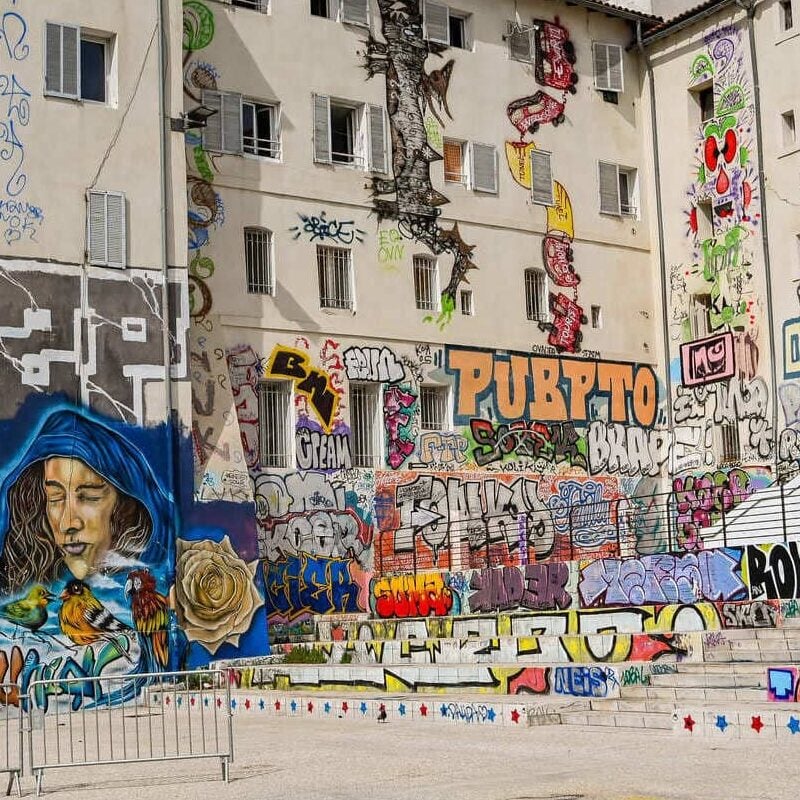
Bordering the port, Le Panier is Marseille’s Italy-like, hilly ‘Old Town’ area. It’s the city’s oldest neighborhood, with centuries upon centuries of Greek, Italian, and North African immigration woven into its multicultural tapestry.
The narrow streets, slender pastel buildings, and trattoria-style eateries, which often carry Italian family names, are a clear reflection of the historic Genoese presence in the area.
Le Panier is also full of galleries, colorful (and thought-provoking street art, and artisan shops, except unlike in other parts of Provence, all those beautiful historic edifices you see haven’t been fully converted into Airbnbs.
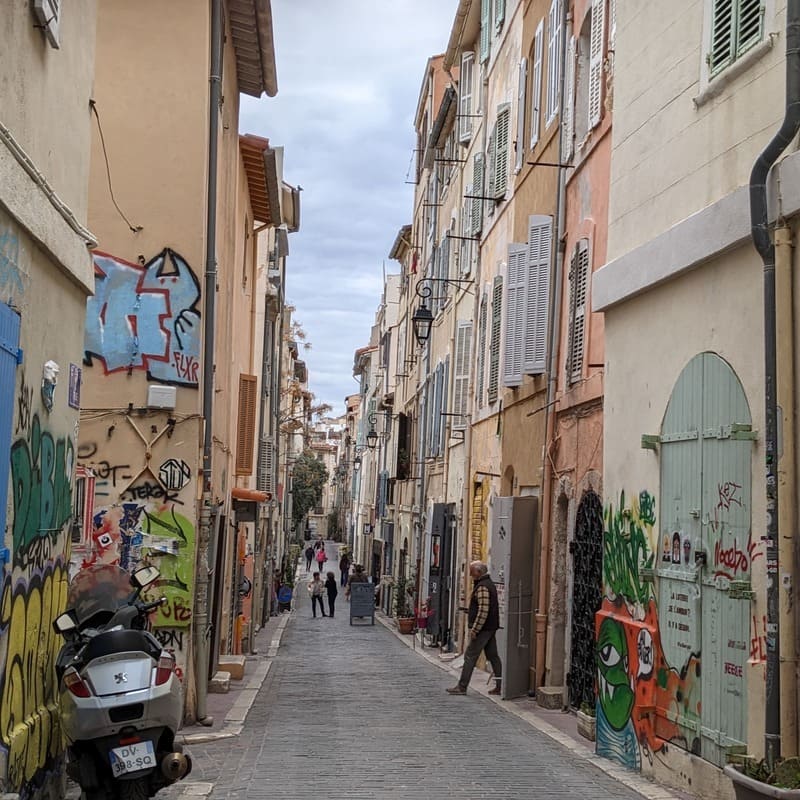
You’ll likely hear livid marseillaise moms having a right go at their kids behind green shutters, come across mischievous groups of 15-year-old frérots skipping school, vaping in the square, away from their parents’ watchful eyes, and kerbside bars with terraces that spill onto the cobbled alleys where French voices are louder than English ones.
In sum, yes, it is a little rough around the edges, and there’s a lot we could say about the cleanliness and general upkeep of the place, but you can’t deny it feels brutally authentic and lived-in.
This Is Not Paris.
This brings me to my next point:
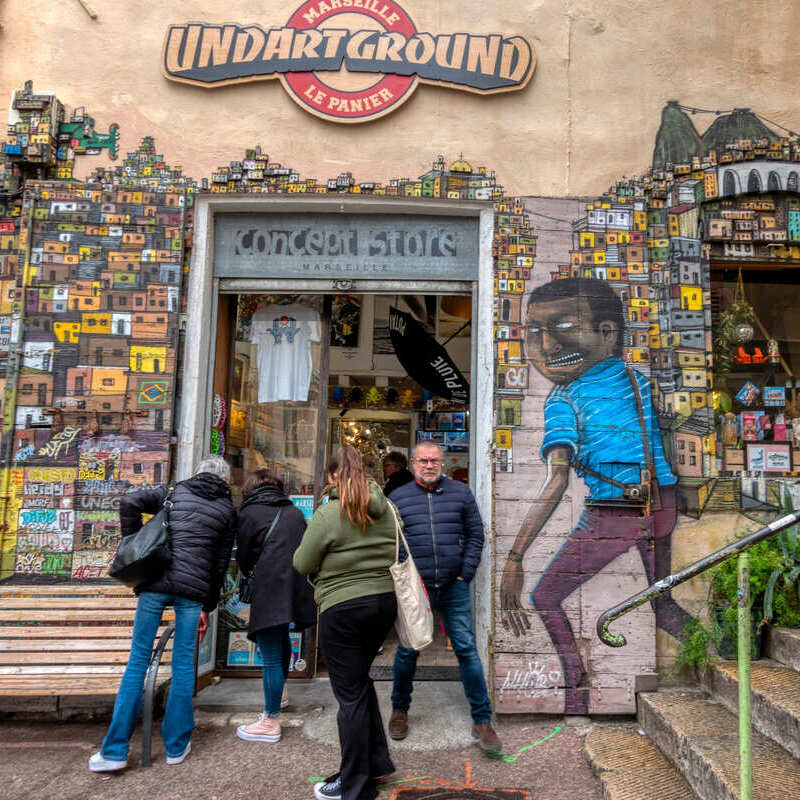
If you come to Marseille expecting a perfectly manicured Old World movie set, or you don’t know how to keep your wits about you in densely populated areas known for their high rates of pickpocketing—higher than Paris, even—you’ll leave either terribly disappointed, or worst case scenario, without your phone.
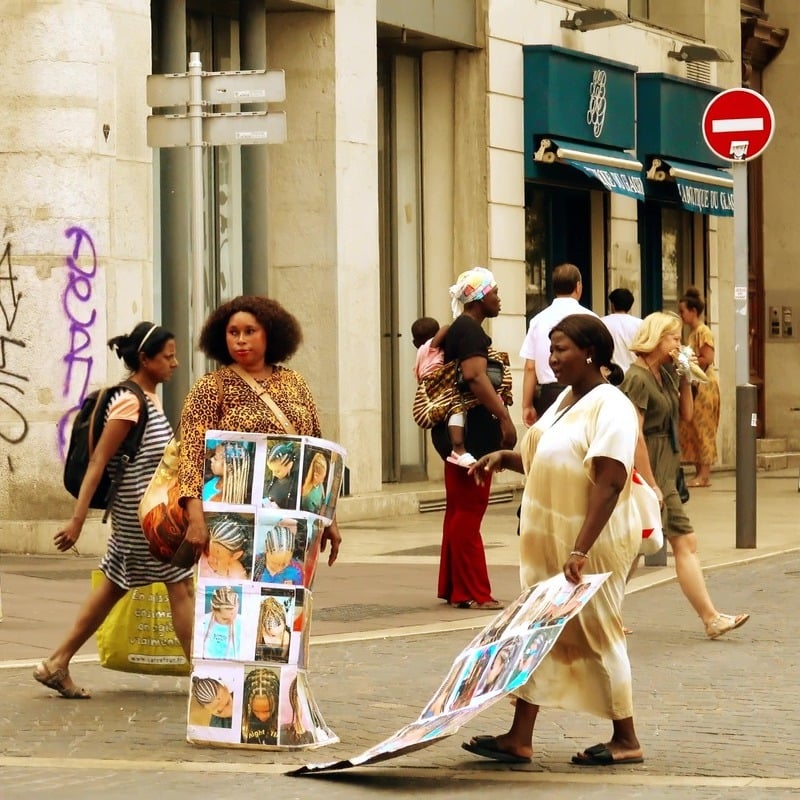
As you get off the train in Gare Saint-Charles, you’ll be a few steps away from an African-dominated Quartier Saint-Michel, with its lively ethnic markets, Maghrebi-style bazaars, and pedestrian chaos.
Some love the multiculturalism, some deplore it, but one thing both sides of the discussion agree is that pickpocketing, poverty, and littering are rampant problems in Marseille’s central area. I tell you this not to put you off visiting Marseille—you should definitely go and check it out for yourself—but so you don’t parachute here completely unaware of what you’re getting into.
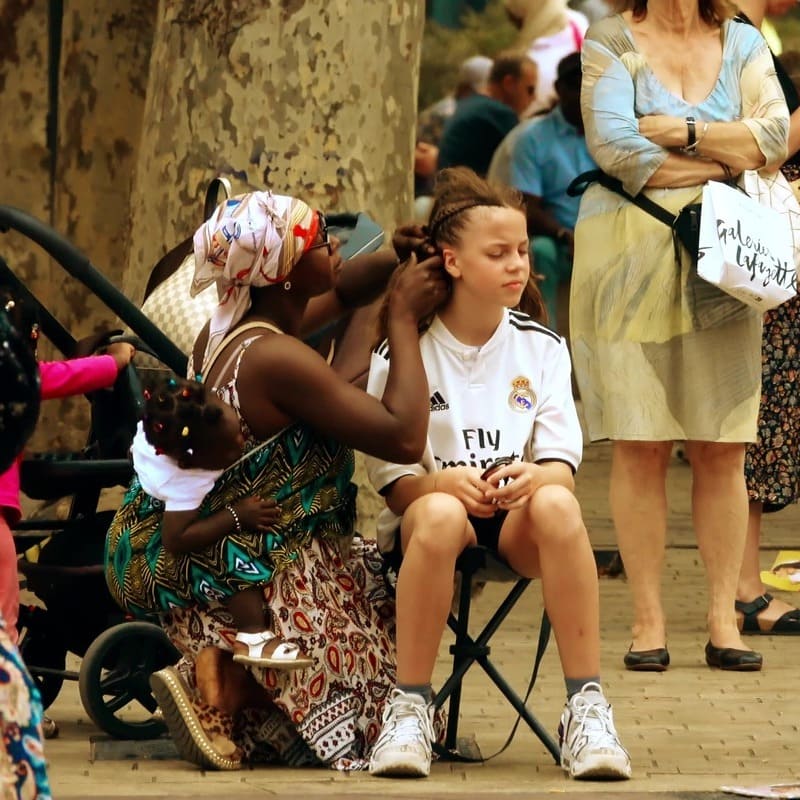
The same applies to artsy, hip districts like Cours Julien, a local youth hotspot packed with cafés and quirky shops. They’re touristy and, for the most part, safe, though only if you’re conscious of your surroundings and can keep flashy jewelry at home.
For the umpteenth time, and for the love of God, this is NOT Nice.
This city is raw and has no intention whatsoever of polishing up anytime soon.
Gorgeous Haussmann-era buildings covered in graffiti, traffic is heavy, and the urban problems are very real. There’s even this old Provençale joke that goes like: après Gare Saint-Charles, c’est Alger!
It literally means that, once you pull up to Marseille Central Station, you’re basically in North Africa.
The Sea Is Marseille, And Marseille Is The Sea
There are a few more things that make Marseille the black sheep of the French family.
Its cathedral, the imposing La Major, is not Gothic or Romanesque in character, but a striped green-and-white Neo-Byzantine stonework. None of Notre-Dame de Paris’s solemness, ribbed-vaults, and rose windows: this one has bold mosaics, marble chapels, and a much larger nave.
Marseille’s most iconic religious building, however, isn’t its actual cathedral:
By the time you’ve strolled around the Port or Panier area, chances are you’ll already have spotted it from a distance:

Notre-Dame de la Garde sits on a limestone hill 162 metres above sea level, and it’s known for its golden statue of Mary, placed at the top of the tower, maritime-themed decorations, and ship models that are displayed along walls and hanging from the ceiling—offered by sailors asking the Virgin for protection ahead of a voyage.
Marseille’s cultural identity is forged by centuries of seafaring and trade between clashing civilisations: the sea is as vital to the city as the city is to the sea.
So, I don’t know, maybe the French (as well as Europeans in general) would find the idea of Marseille being a lesser-known destination like some minor Mediterranean hub in the league of Albania or Montenegro, which actually belong in this category, laughable.

Marseille Is Just The Latest Victim Of… Hidden Geminification
The way I see it, this “hidden gem‑inification” phenomenon tells us more about certain news sources’ desperate need for clicks through absurd claims—especially when targeting wide-eyed travellers yet to visit Europe, who’ll swallow their every sensationalized word like it’s gospel—than the actual destinations they’re banging on about.
You wanna call Marseille underrated? Fine. Have a go at it.
There is an argument to be made for underappreciation here, without resorting to the usual over-the-top, hyped-up rhetoric.
But you better have the on-the-ground knowledge to back it up, or you might just end up sounding like an utter… hem… excuse my French… cagole.

The Travel Off Path Advantage: Your Travel Toolkit
Subscribe To Our Latest Posts
Enter your email address to subscribe to Travel Off Path’s latest breaking travel news, straight to your inbox.