
If you’re tired of the Parises and Barcelonas of the world, and you’ve been dreaming of a European getaway that doesn’t feel like every picture and every museum visit feels like standing in line for hours, I’ve got just the place for you.
At the risk of sounding repetitive, I’ve been to over 40 European countries myself, and hundreds more European cities that most tourists overlook, and most people have never even heard of.
All these miles later, I’ve developed a silent rule: the weirder, more obscure, and more unpronounceable it is, the better.
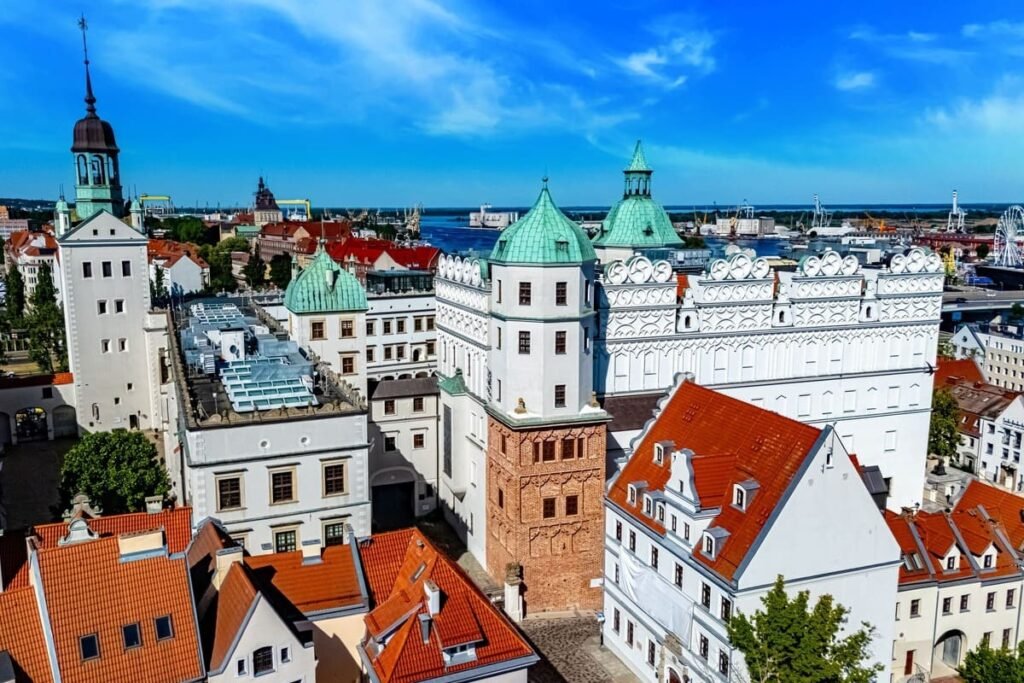
And if it’s underrated autumnal getaways we’re talking, there’s probably nowhere better to slow down, soak up those cozy fall-in-Europe vibes, and wander aimlessly than Szczecin. Did I mention the existence of a huge fairytale castle?
Is This Poland’s Best-Kept Secret?
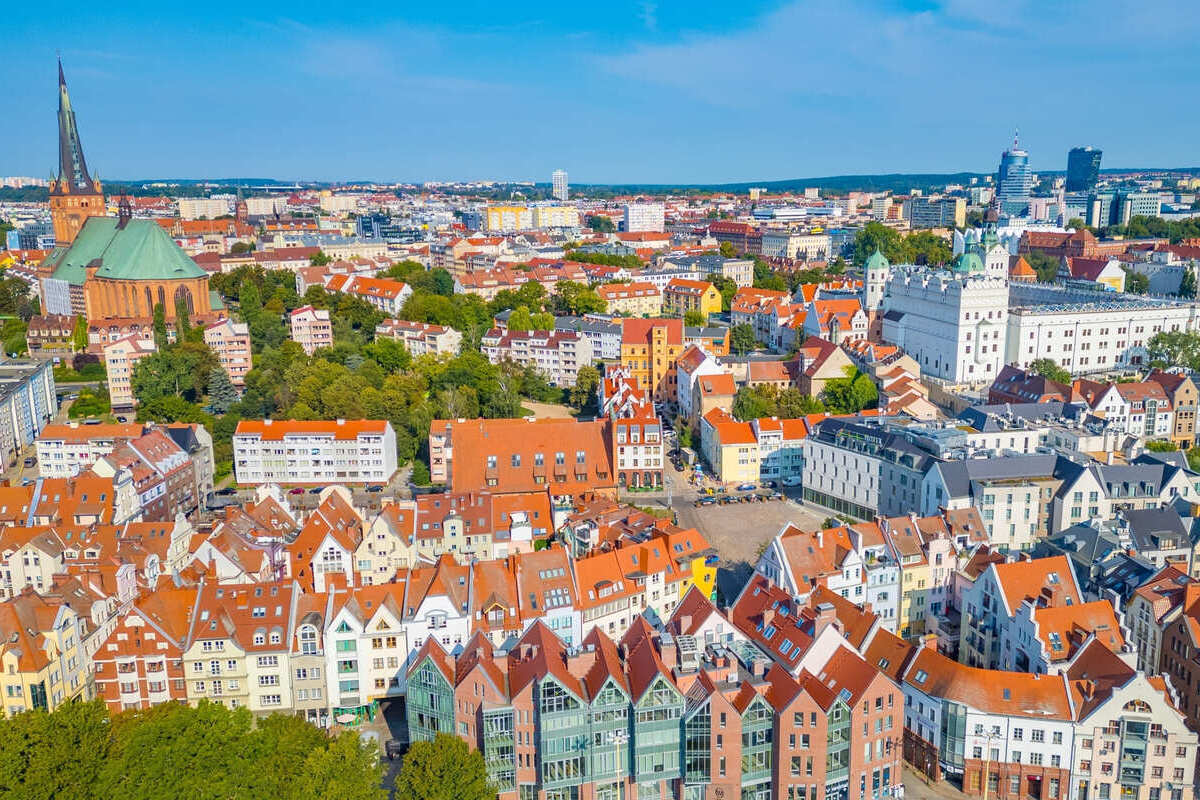
Straddling the northwestern corner of Poland, not the crowded, busy Gdańsk–Gdynia stretch, but rather the quieter frontier where it meets Germany, ‘Shh-tesch-chin’ is the best kind of understated fall escape that doesn’t exactly scream iconic European city, but silently creeps up on you:
It’s hundreds of miles away from the obvious Kraków–Warsaw circuit, and in many ways, perhaps due to its geographical proximity to Germany, it feels distinctly more Germanic than, well, Polish. Berlin is only 2 hours away by road, while Warsaw is a whole 5-hour trek.
Szczecin is also built around water, and it probably stands alongside Wrocław as one of Poland’s most unique urban landscapes: similarly to its Silesian counterpart, it’s dotted with islands criss-crossed by canals, flanked by waterfront promenades, and crossed by bridges over the Oder River.
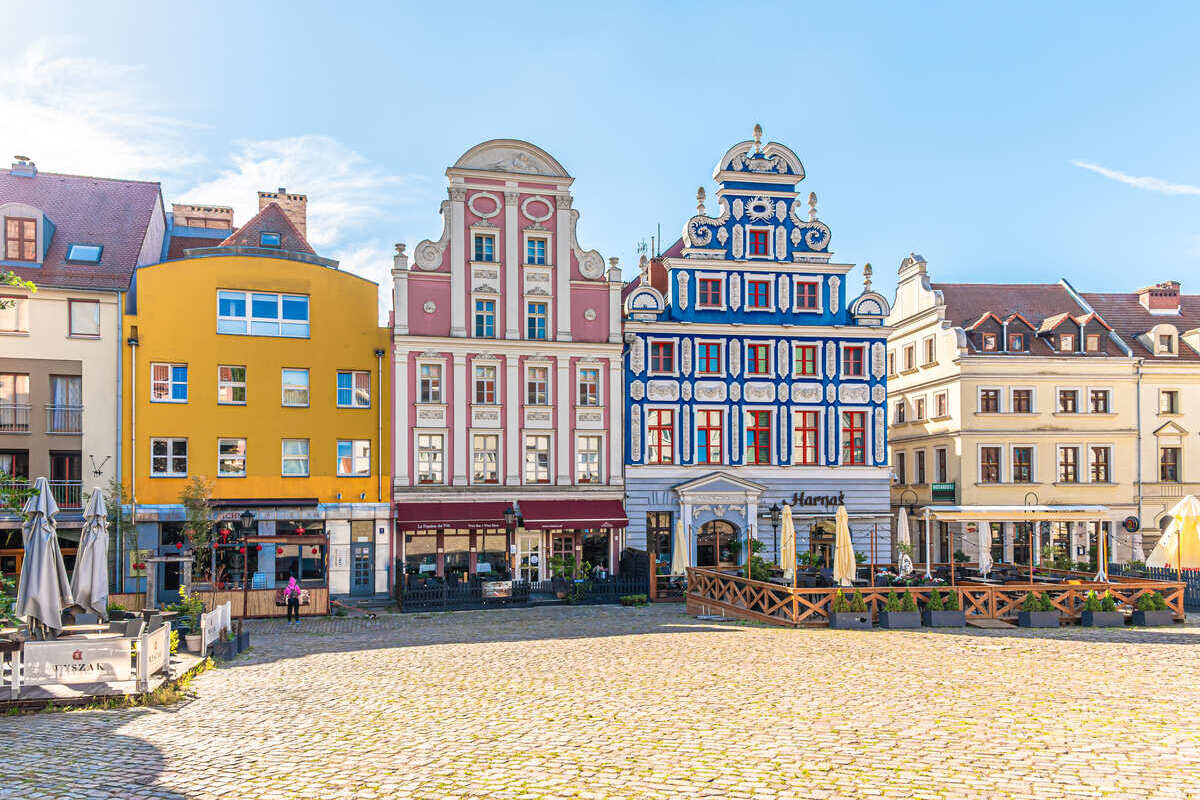
What I love the most about Szczecin, however, is how it effortlessly combines old-world European grandeur, with ornate Renaissance palaces, imposing Gothic churches, Prussian architecture, with leafy boulevards and enormous green spaces.
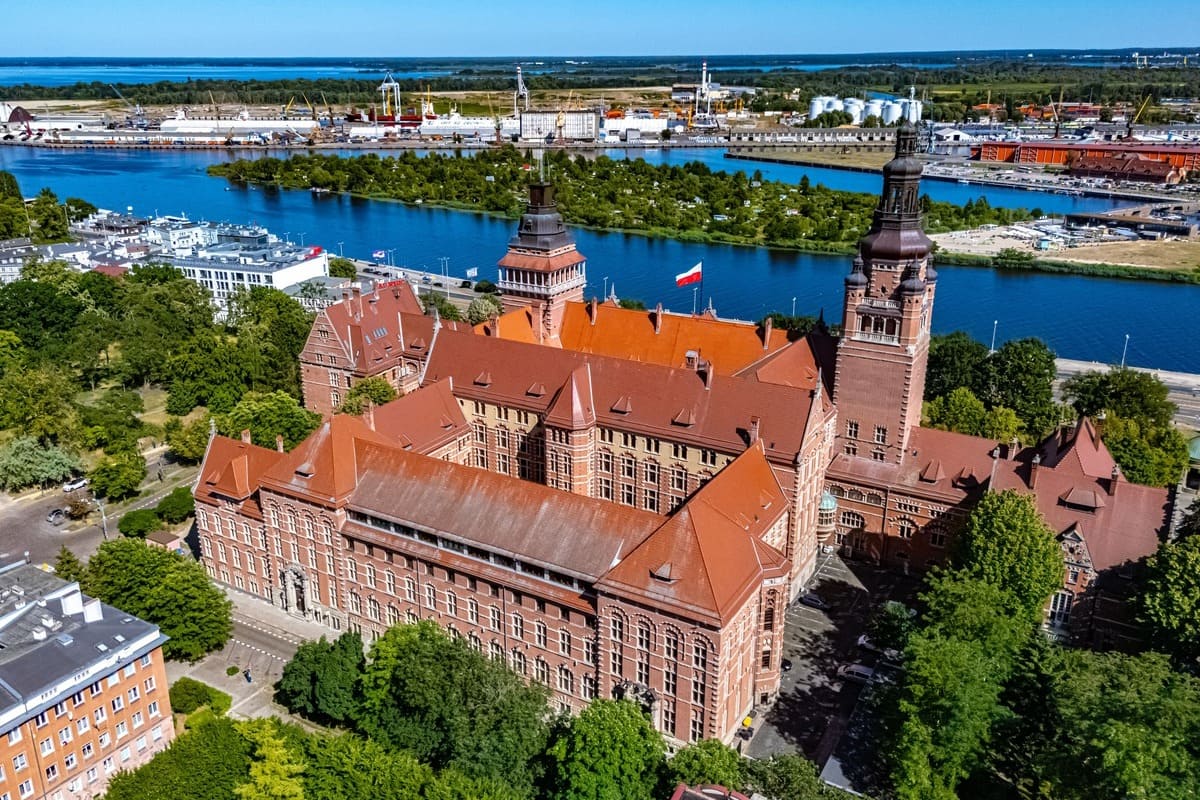
Despite being home to around 400,000 people, it’s also surprisingly compact, so you can cover a lot on foot:
A Stunning Fairytale Castle Right On The Riverfront
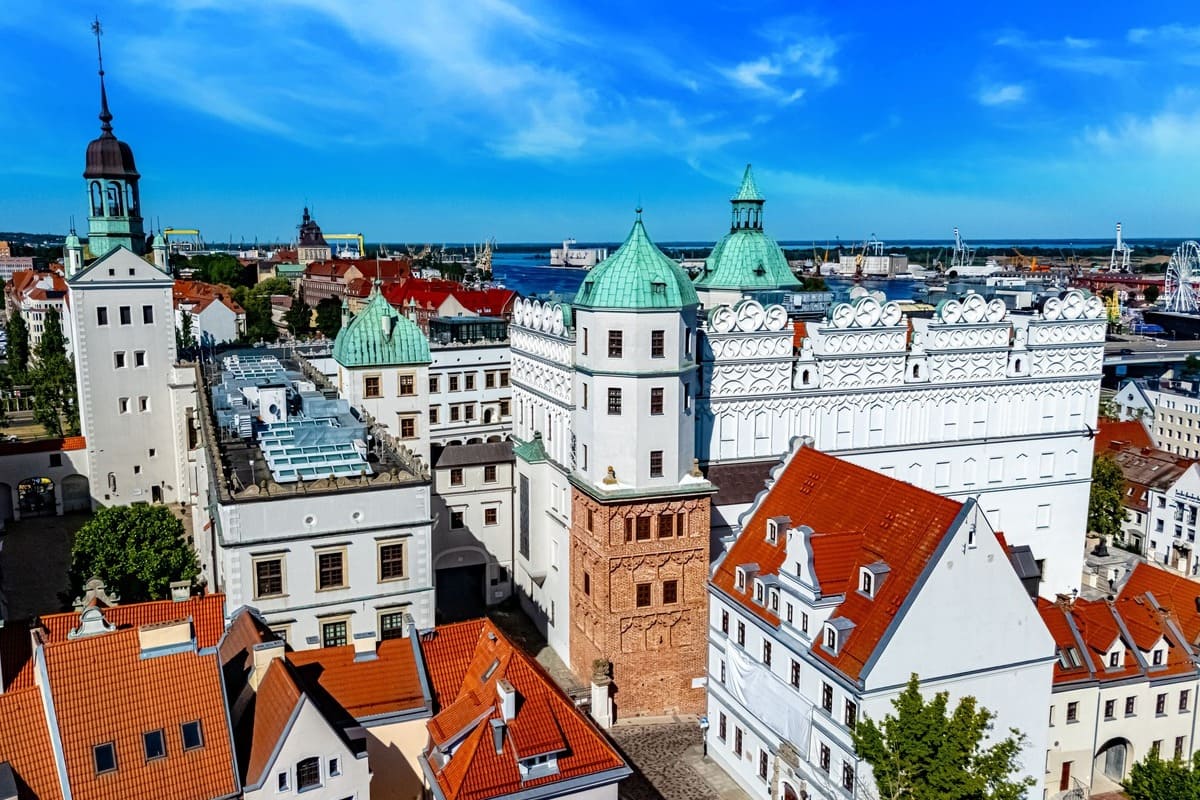
The crown jewel here is the Pomeranian Dukes’ Castle.
I’m not gonna go full European History geek on you and give you the entire timeline of the famous Griffin dynasty, the dukes who ruled the historically German region Szczecin sits in… though I was on the verge of doing just that.
All you need to retain is that this is the wild-card attraction: a monumental Renaissance castle that rises almost like a white iceberg out of the colorful maze of the Historic Center.
Let me just put it this way: if you think Wawel Castle in Kraków was the best Poland had to offer in the royal-residence department, you’re in for a literal big surprise here.
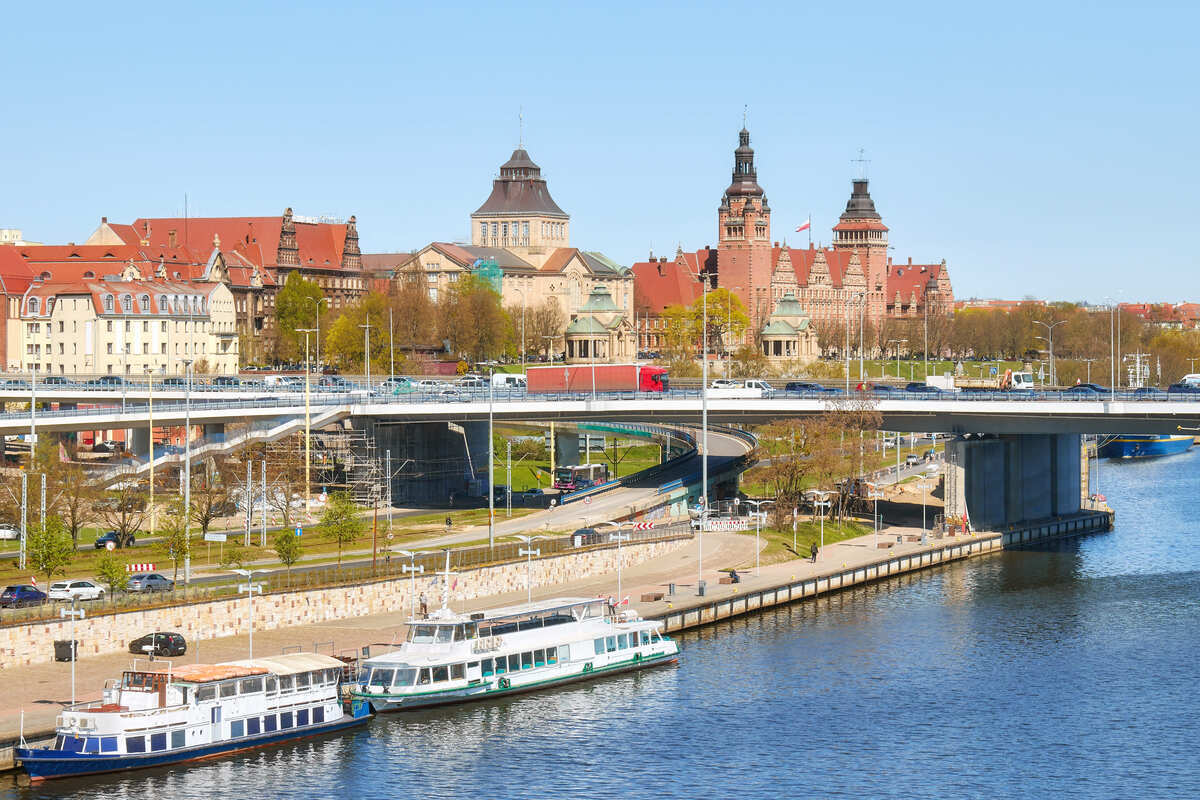
Lavishly-decorated rooms, interconnected courtyards, grand staircases, and castle terraces overlooking the city make this worth the detour alone. The terraces themselves are free, while the permanent exhibitions cost just 30 PLN.
That’s something like $8.
By the way, Szczecin is genuinely affordable by European standards, especially for a city break in the fall.
If I were you, I’d budget around $70–90/night for a comfortable, well-rated downtown hotel, $12–15 for every sit-down meal in the Historic Center—I’m talking a starter soup, a generous serving of pierogi, and beer included—and around $3 for every half-liter pint of Bosman.
Check Entry Rules Before Flying To Europe

If you’re traveling to Europe in the near future and you’re a U.S. passport holder, keep in mind there are new travel rules in place you may not be aware of.
As an American, you will now be required to undergo ramped-up biometric border checks as part of the European Union’s Entry/Exit System (EES). This involves having your fingerprints and facial image recorded.
Starting in 2027, should there be no more delays, you will also be expected to apply for pre-travel authorization to fly.
Sounds confusing? You don’t need to work it all out by yourself: that’s what the Entry Requirement Checker is for.

Just type in the European country you’re headed for, and it will pull up the exact list of documents you need to present, and whether there are any pre-flight steps to complete, like visa applications, Electronic Travel Authorizations, or entry forms.
One Of The Prettiest Old Towns In Poland
This castle is worth the detour alone, but don’t be sleeping on St. James the Apostle.
The Gothic showstopper hiding in the middle of the cobble-paved maze that is Szczecin’s Historic Center, this cathedral is a tour de force in its own right.
For starters, it’s a huge red-brick Gothic hall church dating back to the 1100s, with a towering 110-meter spire that soars above the gable roofs and medieval skyline below. Second-tallest church in Poland after St. Mary’s in Gdańsk, thank you very much.
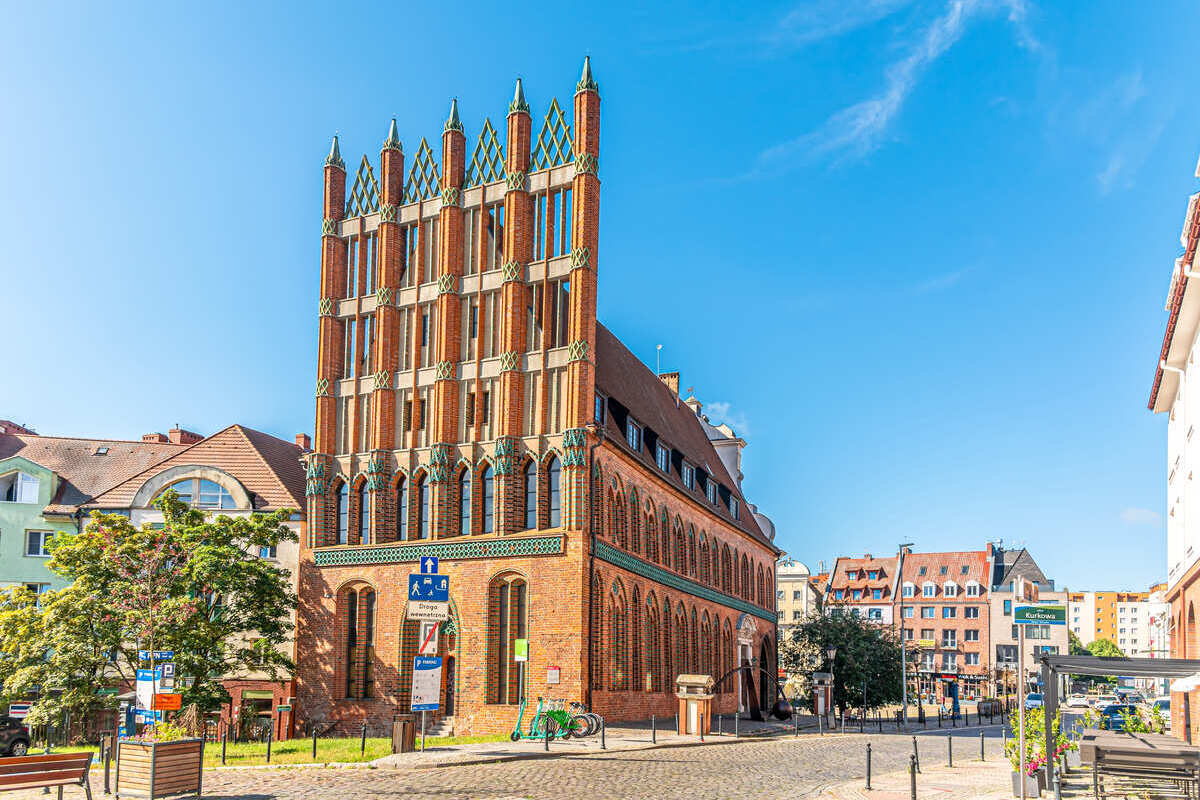
Inside, you’ll find 19 chapels, Gothic artworks, and a spectacular organ with a whopping 4,743 pipes. I didn’t count them, but every eardrum in the building could probably hear them.
You can also take a lift right up to the cathedral tower for views over the whole of Szczecin, the Oder, and the lush countryside beyond the communist-era Brutalist blob that surrounds the city’s timeless medieval core.
Wały Chrobrego, right at the waterfront, shouldn’t be overlooked, either: this is probably the city’s defining sight, a monumental 500-meter-long terrace overlooking the Oder and its sprawling harbor.
More than just a viewpoint, this is genuinely one of the most beautiful, postcard-ready waterfront spots I’ve been to in Europe. It’s the kind of place even your uncle armed with a dodgy 2009 camera could make look like an airline-magazine cover shot with minimal effort.
The Most Magical Autumnal City Break In Europe
The whole theme is autumnal getaways, so you’re probably wondering how Szczecin compares on the fall-foliage front.
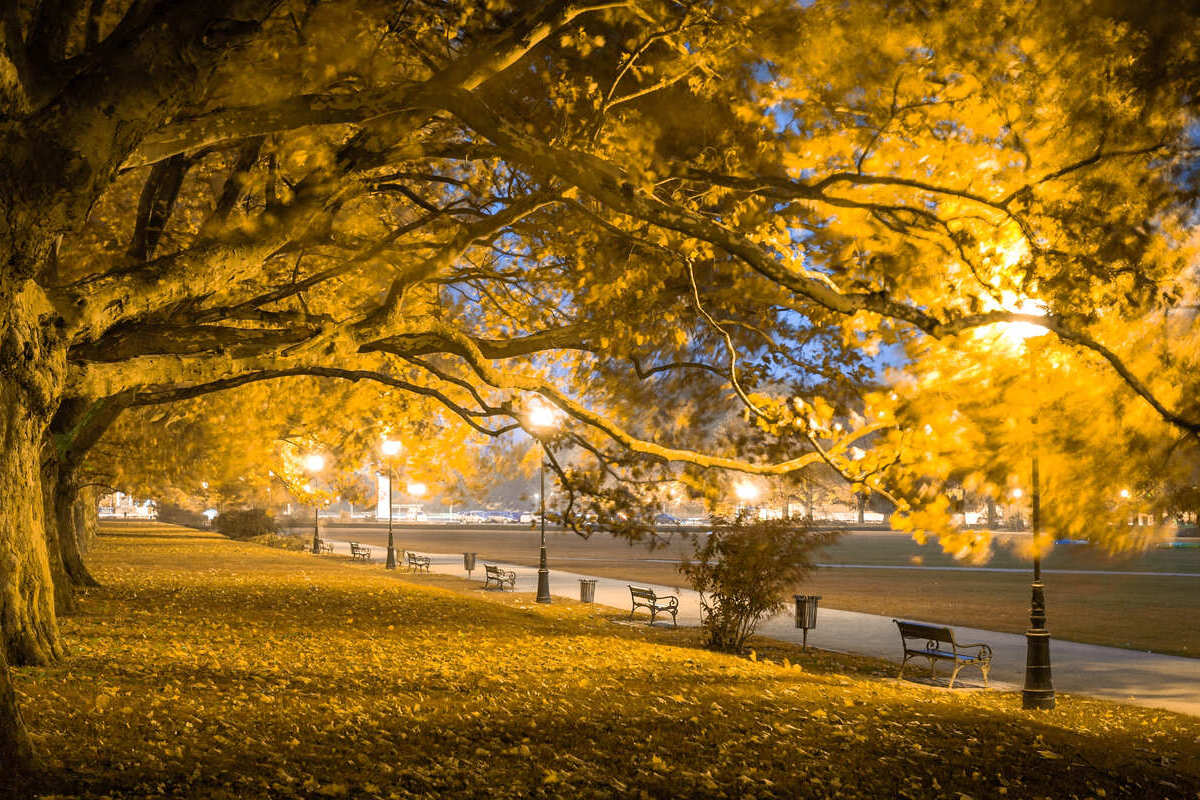
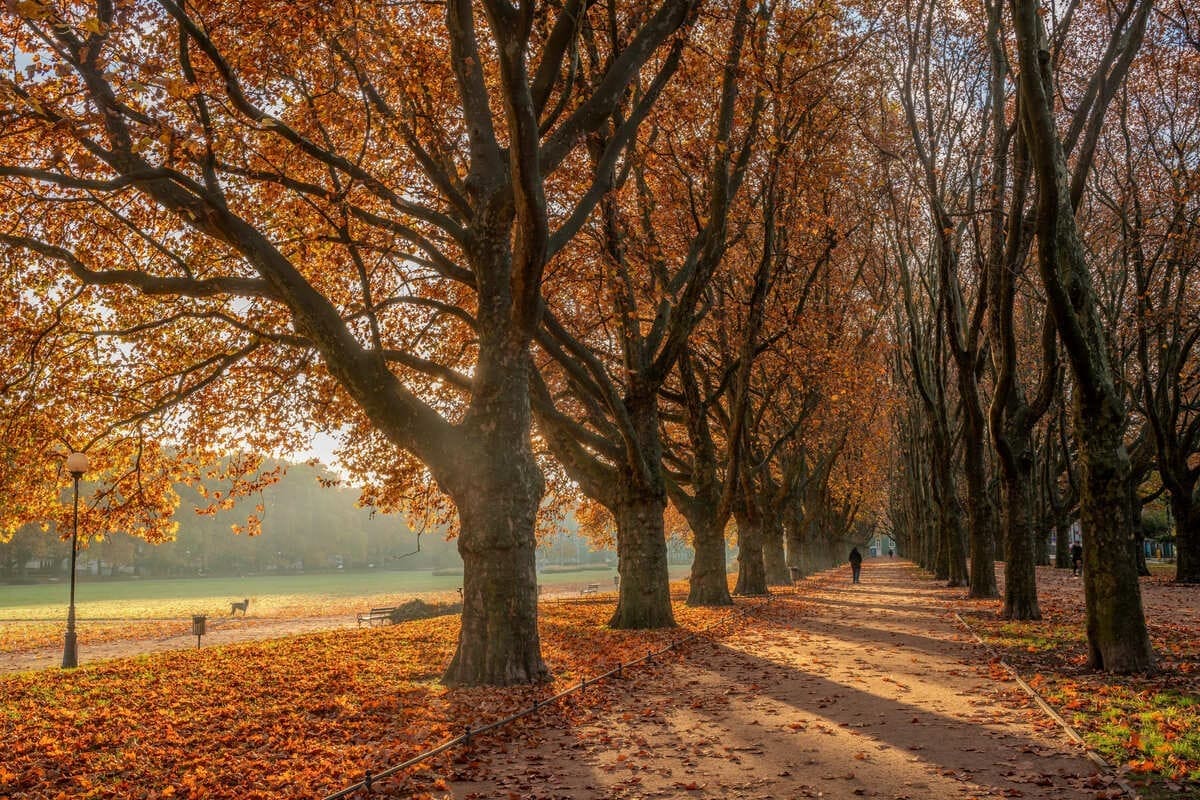
As urban a city as it may be, Szczecin is truly a green oasis in the middle of a huge expanse of woodland, and places like Kasprowicz Park, a short walk from the Historic Center, and Jasne Błonia, a quiet, leafy oasis of lawns and trees, turn into a sea of fiery reds, amber golds, and muted yellows as summer fades.
Additionally, it’s simply a lot quieter.
Don’t believe what they tell you about Kraków or Warsaw being hidden gems waiting to be discovered—remember how that went for Marseille?
Poland is P-O-P-U-L-A-R, and it gets busier by the year as tourists get drawn to the bargain prices, the high levels of safety, and the sheer beauty.
How Safe Is Poland?
Speaking of safety, Poland scores an impresssive 92 out of 100 on the Traveler Safety Index, based on reports from recent visitors.
The reason why cities like Szczecin are so ridiculously safe?
The entire country has lower rates of street crime and extremist incidents than countries like France, England, or Spain, and in general, visitors feel a lot more at ease exploring large urban centers in Poland than across many of its neighbors to the west.
Fall In Europe In A Nutshell
Oh, it’s not a proper fall getaway until you’ve nailed that hot-choccie stop, and in Szczecin, I’d go with Pijalnia Czekolady E.Wedel near the Royal Gate.
It’s more of a dedicated chocolate lounge than a specialty-coffee shop, but that’s precisely why it’s such a winner for the season: think rich hot chocolate, the kind you have to sip off the rim of the mug given how thick it is, warm, gooey cakes, and pralines.
My version of Polish heaven? Grab yourself the raspberry version of that for takeaway, zip up, and head to the Oder waterfront as the afternoon mist rolls in, and the golden light ruffles on the russet leaves.
Szczecin has what I’d describe as perfect café weather: it’s not freezing like other parts of the Baltics, nor does it retain that lingering summer heat that still sees places like Andalusia in Spain and Cyprus scorched as late as October.
So… I guess we’ll see you on the banks of the Oder, sipping on that czekolada in a couple of months, maybe?
Enter your email address to subscribe to Travel Off Path’s latest travel news, straight to your inbox

Source link