
It’s become all too commonplace to reduce Italy to being overtouristed and overhyped.
Between the Roman Colosseum, the winding Venetian canals navigated by long-tail gondolas, and Pisa’s Leaning Tower selfie hub, the ungodly sight of shoulder-to-shoulder crowds is unavoidable.
That’s not to say this applies to the wider country, you know, beyond the usual Instagram hotspots.
It only takes veering a little off the beaten path in Italy to discover that those doom-and-gloom claims are blown out of proportion.
Sure, the world-famous landmarks are packed full of tourist hordes, but take a slight detour to the hilltop village that’s yet to feature on a Hollywood blockbuster, and you’ll find out what’s on the other side of the dolce vita cliché.
With this in mind, here are Travel Off Path’s handpicked 5 uncovered Italy destinations to visit in 2026:
PLUS: We built an interactive quiz at the end of this article to find your perfect match. Scroll to the end to try it out!
Cividale del Friuli
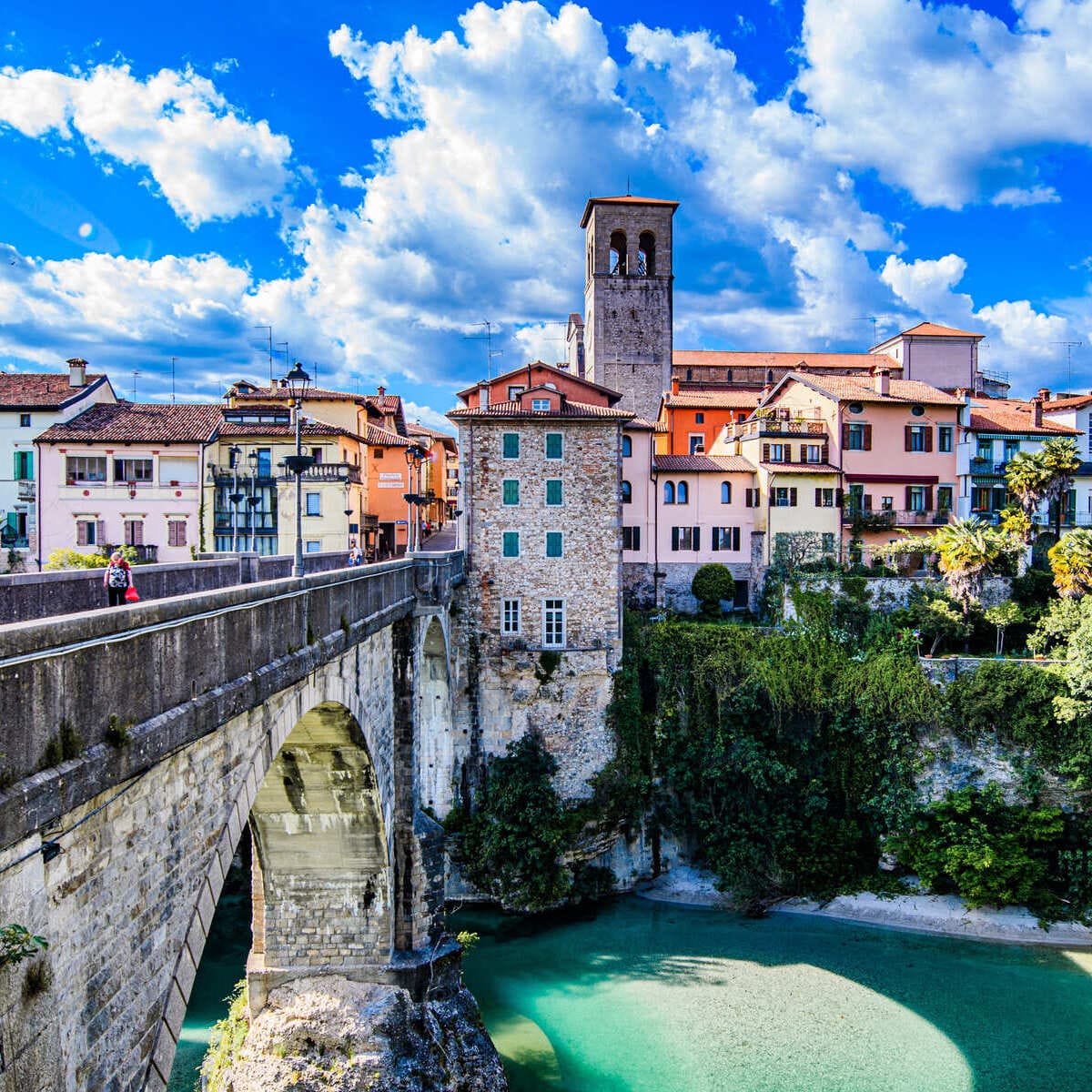
Tucked away in the verdant hills of Friuli-Venezia Giulia, Italy’s northeasternmost region, Cividale del Friuli is a quaint riverside commune best known for its imposing stone bridge and well-preserved historic core.
The said crossing, dubbed the Devil’s Bridge, spans a gorgeous alpine stream so clear you can see the rocks lying at the bottom.
The church towers, and pastel-hue townhouses that hang from the sides of the ravine only add to the timeless feel of the place, and if your heart usually skips a beat the minute you cross an ornate gate into a maze of cobbled, medieval lanes frozen in time, you might go into cardiac arrest there and then.
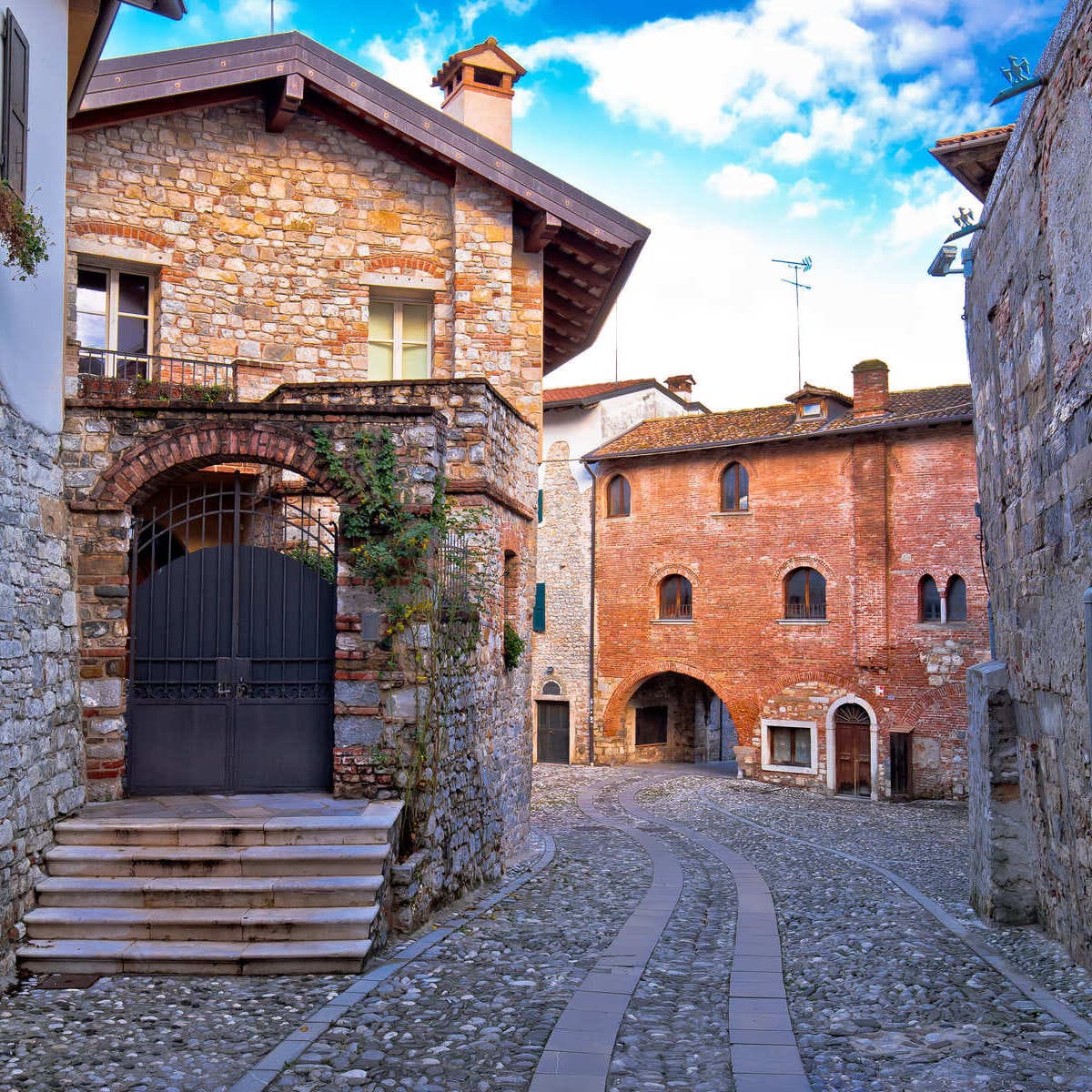
Cividale’s Old Town is quite honestly one of the prettiest in Italy, with winding lanes that lead to secret courtyards, romantic fountain squares, and old churches with Roman origins hiding lavish Baroque interiors—and the best part? Not a single camera flash to be heard.
Looking for that wow factor?
Check out the Lombard Temple of Santa Maria in Valle, one of the best-maintained examples of early medieval architecture in Italy. It’s part of UNESCO’s ‘Longobards in Italy’ heritage portfolio, and it’s mix of native Lombard, classical, and 8th-century sculpting is unique in character.
Portovenere
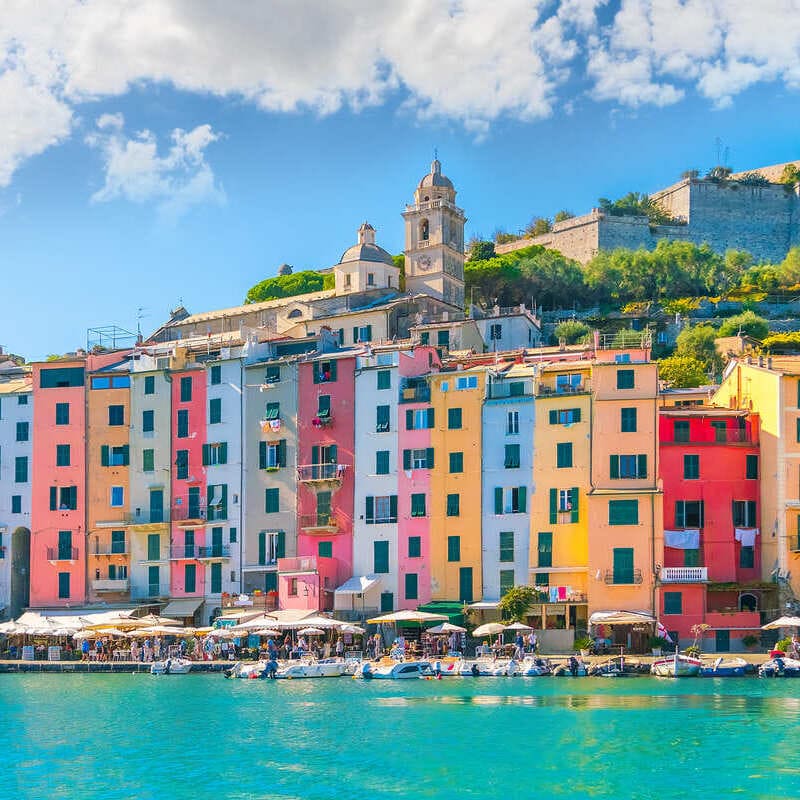
You’ve probably heard of Cinque Terre, Italy’s quintet of train-connected colorful villages that gets swarmed by TikTok influencers in summer, but what if we told you you don’t need to march into the maddening throngs of Monterosso or Riomaggiore to experience Liguria’s irresistible charm?
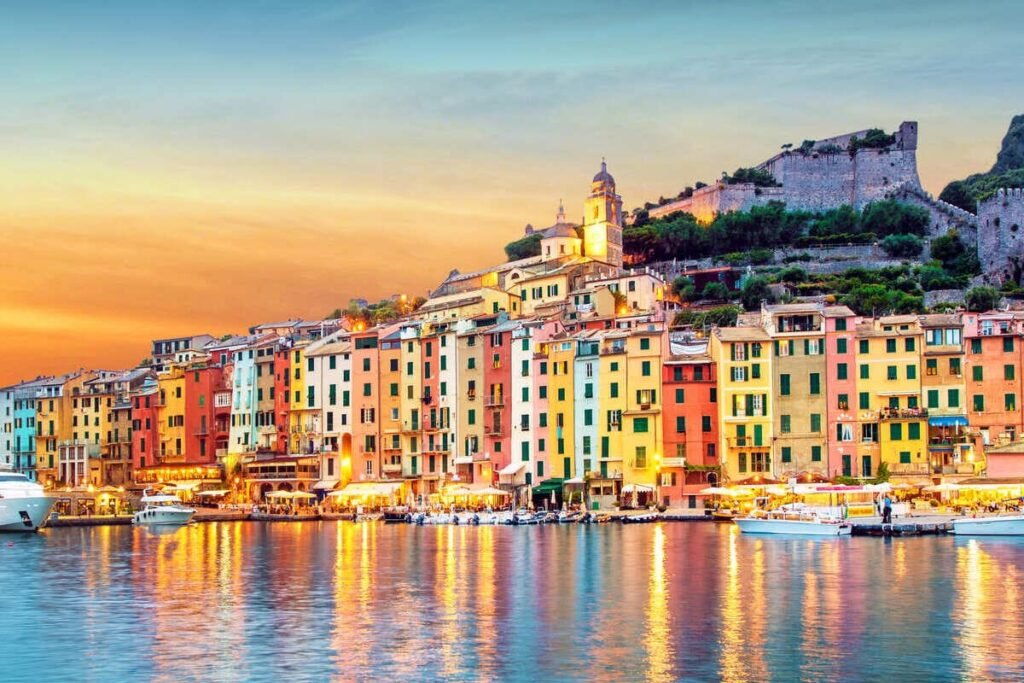
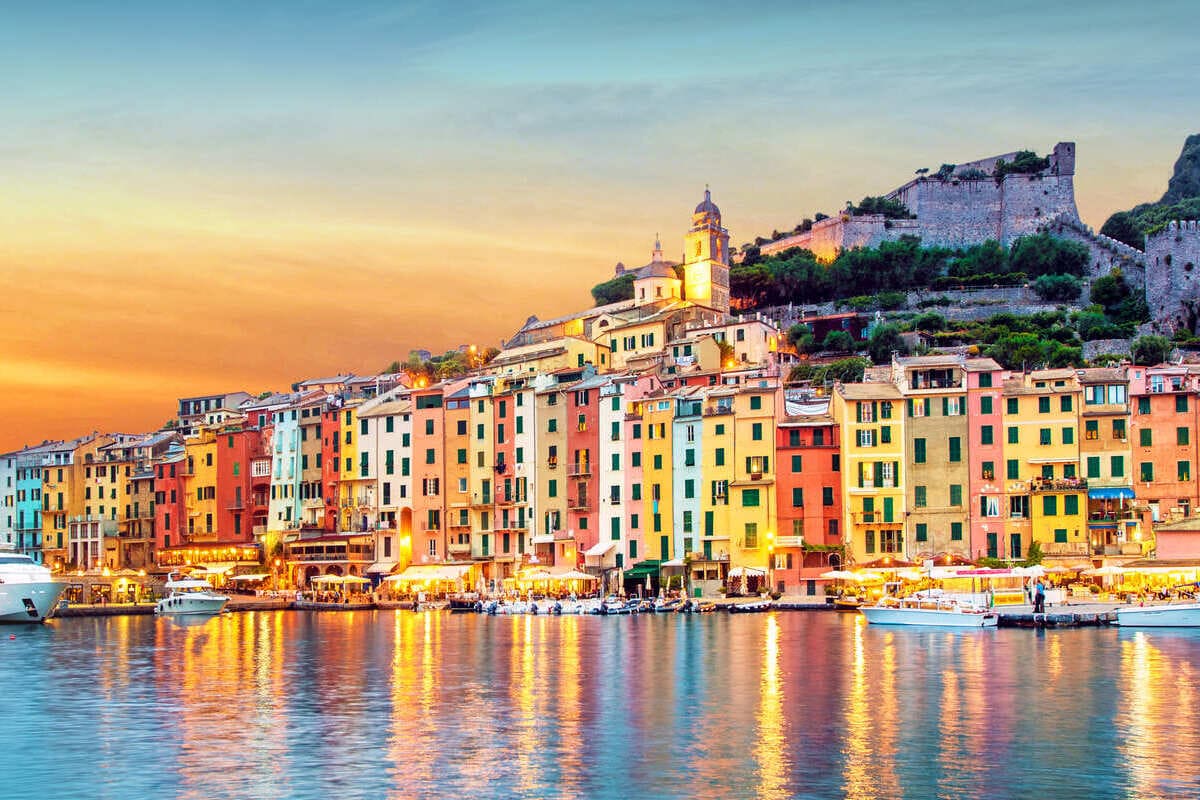
Before you make it to Cinque Terre proper, Portovenere is a preface of sorts, boasting the same pastel-colored skinny buildings, stacked on top of each other, a cliffside church built onto bare rock over the sea, and a medieval fortress standing watch over a scenic harbor.
The church, probably the main attraction here, carries that distinctly Ligurian ‘striped’ look, with alternating light and dark marble slats for the façade.
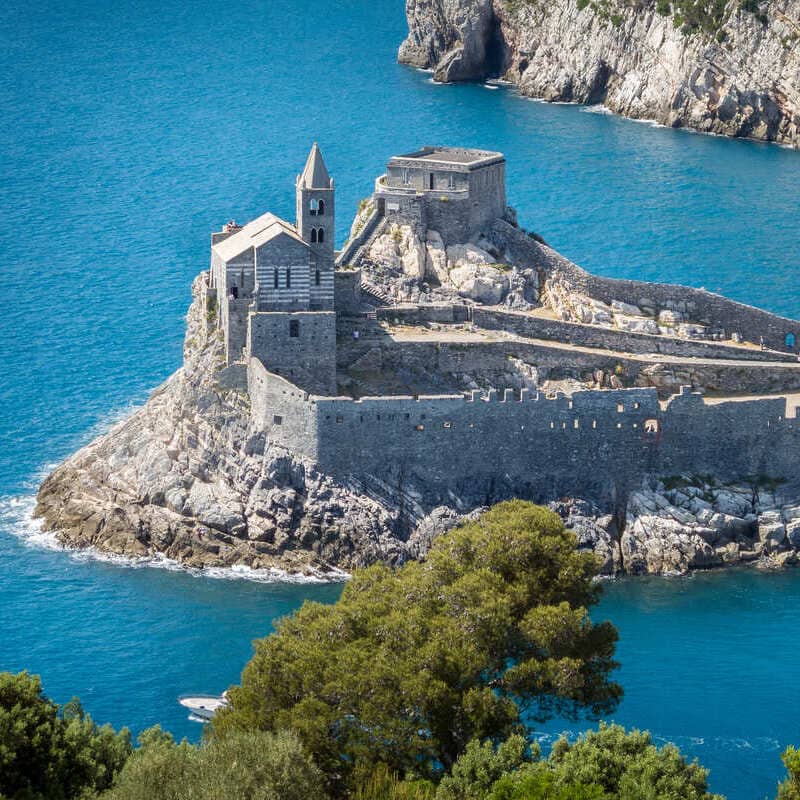
Oh, and its views over the deeply romantic Gulf of Poets? Easily rival the priciest panoramic terrace in Manarola, and it’s not like there’ll be a dozen other selfie-takers photobombing your perfect Med summer moment.
You see, you don’t even need to queue up for hours to get here, nor pay $15 on a watered-down Aperol Spritz just for a pic.
The coolest part is that Portovenere is a short 5-minute boat ride away to Palmaria Island, a slice of Mediterranean paradise criss-crossed by hiking trails, and ringed by secluded pebbly beaches with none of the Cinque Terre crowds. Just the perfect day trip away.
Cremona
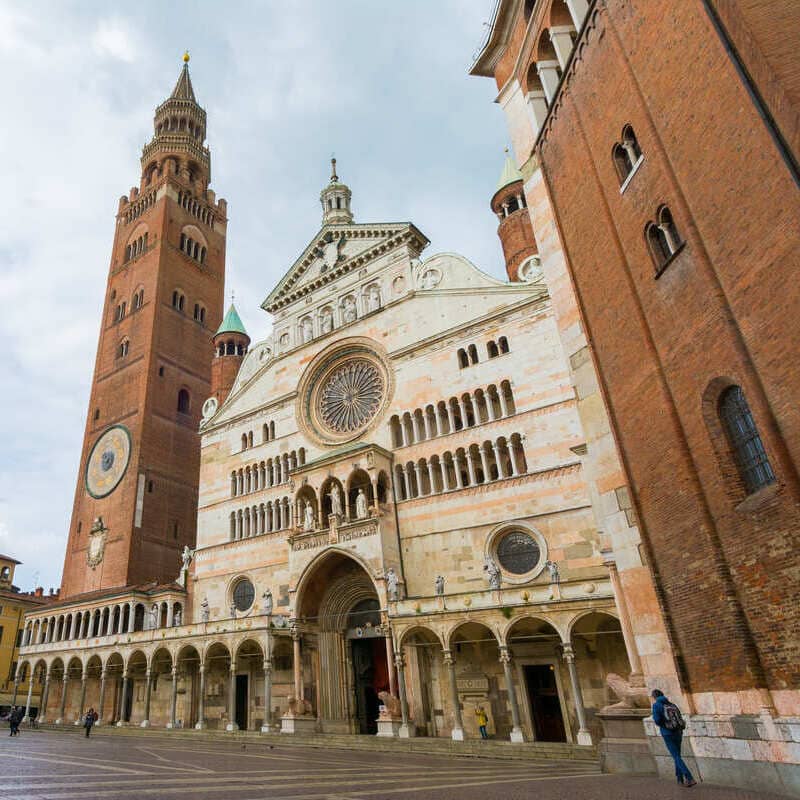
Roughly 50 minutes by train from Milan, Cremona is an offbeat Italian city whose local claim to fame has a lot to do with violins and delicious food. Right, fair enough, it has a stunning Old Town, too, but we’ll get to that in a bit.
To the music buffs out there, Cremona is probably the top destination you want to visit in Italy: the local Violin Museum is not only a (proud) display of the world’s most historic violins, but a celebration of the city’s world-famous luthiers: we’re talking Stradivari, Guarneri, and others.
Many traditional workshops still operate in the vicinity of the museum, so you can see craftsmen at work, and if you’re passionate enough about the craft, even book musical tours.
I have to be honest, I’m not the greatest violin geek out there, but I do love me some good old pasta, and Cremona earns a spot here for its tortelli cremonesi alone.
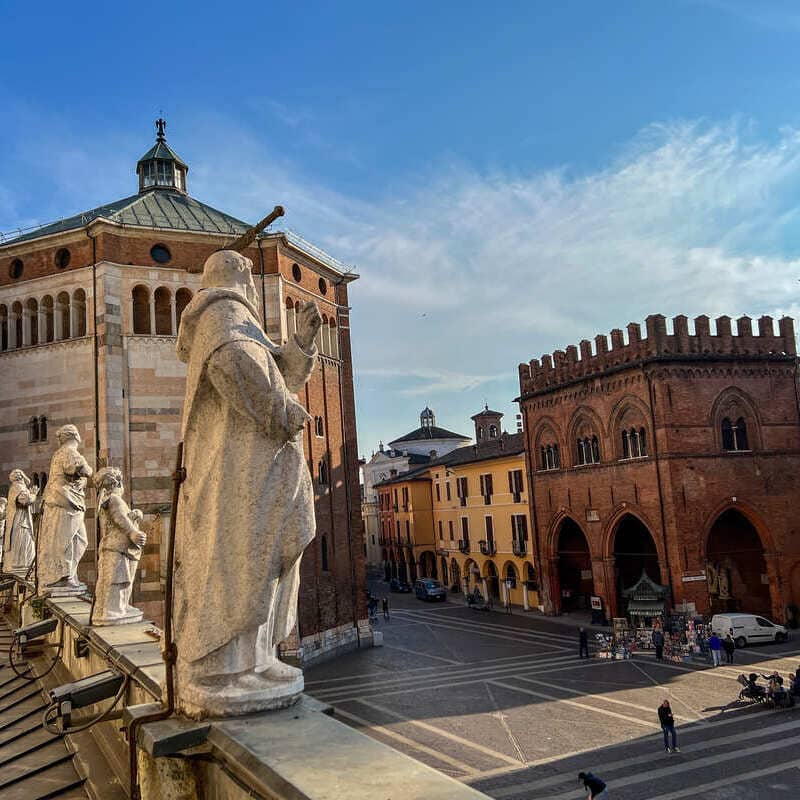
Square parcels of handmade pasta filled with ricotta, and sometimes, even grated Grana Padano cheese, it’s hands down the most delicious local variation of ravioli you’ll try anywhere in Northern Italy. You needn’t look far for it, either: any cremonesi trattoria will serve it up authentically.
Oh, and have we mentioned Cremona’s Duomo is a marvelous Romanesque-Gothic ensemble with a stunningly carved main portal? Or that the 12th-century baptistery, octagonal in form and clad in medieval frescoes, rivals even Florence’s in beauty?
Maybe you should also know the medieval Torrazzo is still one of the tallest brick bell towers in Europe, and you can climb it for panoramic city views… yeah, we think you’re sold on the idea of going.
Lecce

Speaking of Florence, you might want to swap it out for the so-called Florence of the South if maddening crowds aren’t your thing:
Located in the much-overlooked region of Puglia, which will soon start hosting Transatlantic flights directly from JFK, Lecce is incredibly rich in Baroque and Renaissance architecture, and if you’re a Rome aficionado, its Ancient Roman allure leaves nothing to be desired.
The Baroque masterpiece around here, Basilica di Santa Croce, is a surviving treasure from the Middle Ages with a delicately sculpted façade and a solemn, yet impactful interior.
Equally majestic, the neighboring Duomo has a glowing Renaissance soul that’s hard to ignore.

Don’t get us wrong, this is no Cupola di Brunelleschi, so keep your expectations realistic if you’ve already been wowed by Florence’s striking red dome, but there’s something about Lecce Cathedral’s soaring bell tower, lavish façade, and golden stone that just makes your gaze linger for a little longer than usual.
Enough with the churches. At the heart of the city’s ocher-colored pathways and labyrinthine center, Lecce boasts what’s possibly one of the most unique public squares in all of Italy:
Piazza Sant’Oronzo is built over the ruins of an Ancient Roman amphitheater, parts of which are still visible around the elliptical shape of the square, and sitting down for coffee in one of the many cafés in the area, and just soaking in the historic layers around you, just hits different.
Oh, needless to say, the Colosseum-bound busloads of tourists aren’t coming all the way out here.
Alghero

Who said you need to elbow your way through an indiscernible mass of bodies in Barcelona’s Las Ramblas to bask in that ancient Catalan atmosphere?
As weird as it may seem—trust us, having been all around Europe at this point, we’ve seen our fair share of cultural anomalies—this small coastal city named Alghero, perched on the northwestern coast of Sardinia, is like an extension of Catalonia in Italy.
You read that right.
Alghero was actually settled by Catalans in the 14th-century, after a Catalan king, Peter IV, stormed Sardinia and took over much of the island. Though Italians would reclaim the territory slowly over the centuries, Alghero remained staunchly Catalan.
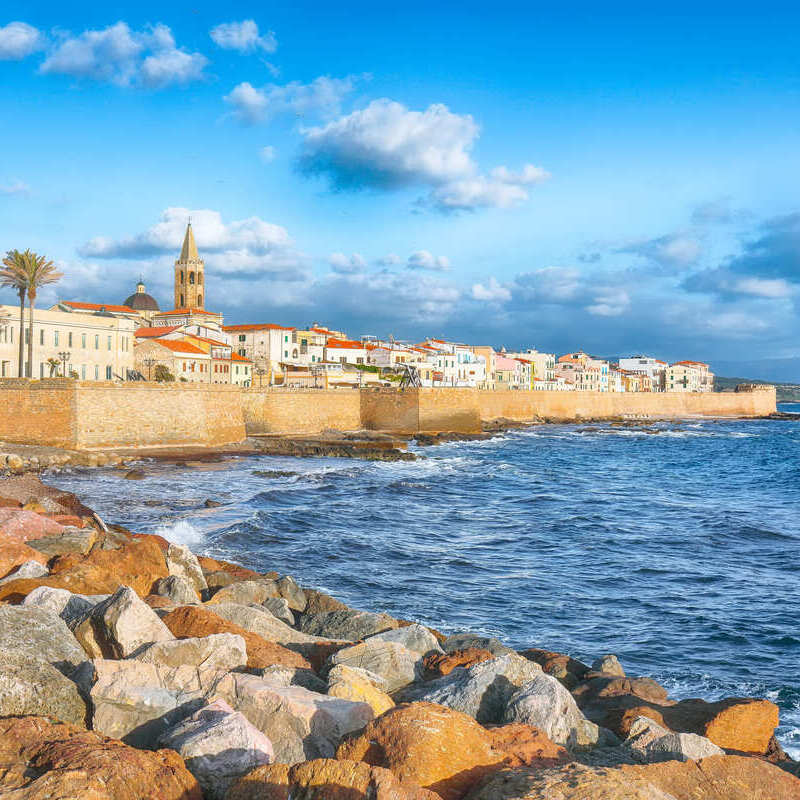
It was populated by colonists from Iberia’s southwesternmost fringes, and it developed as a strong Catalan outpost from 1354 up to 1720. Naturally, it’s every bit as part of Italy now as the rest of Sardinia, but don’t be shocked if you hear a hint of Catalan being spoken by a nonno in a tabaccheria.
On top of that, all around town, you’ll find distinctly Catalan-Gothic buildings, most notably the cathedral, a centuries-old marvel of sandstone with typically Iberian pointed arches, and the quiet cloisters of the Franciscan-built Chiesa di San Francesco.
Now, let’s make one thing clear: this isn’t Barcelona’s Sagrada Família, so maybe reel in the high hopes if you’re chasing Gaudí-level drama, but if you’re all about honey-colored buildings, coral accents, and a marine-backed skyline, unassuming, laid-back Alghero’s your port of call.
Now take this quiz to find out which Italy gem is for you!